
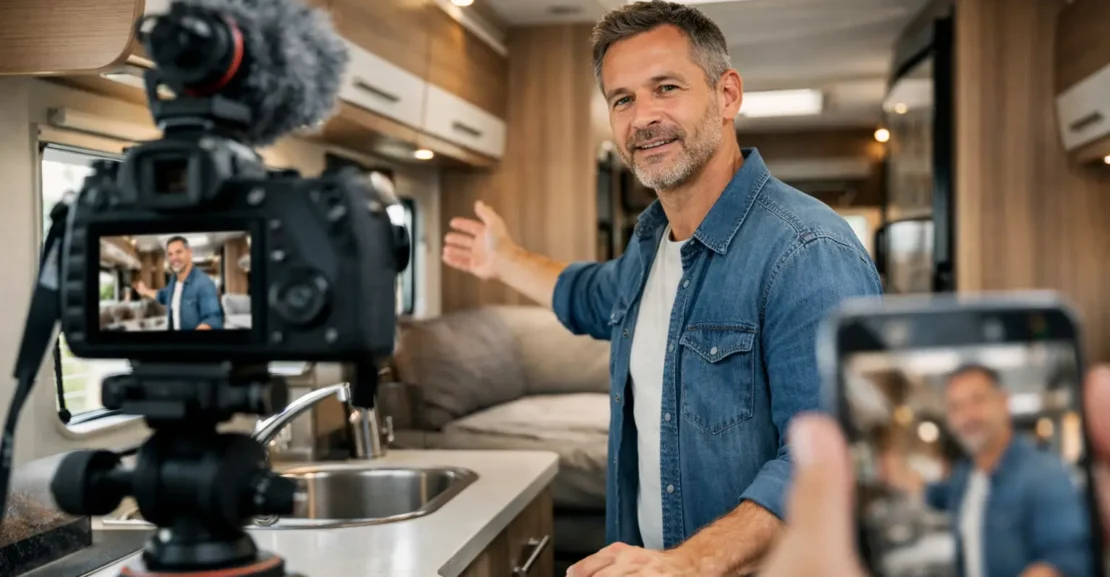
A motorhome can look excellent in photographs yet feel completely different once you step inside. Motorhome walkthrough videos bridge some of that gap, showing how a vehicle flows from cab to bedroom, where the storage sits and how the living space may work for your style of travel. They are a valuable starting point, particularly when the vehicle is in another part of New Zealand, but they should inform a viewing rather than replace one.
For couples planning extended trips, first-time owners moving from a caravan, or experienced travellers upgrading to a newer layout, a good video can quickly answer the question that matters most: can we genuinely live in this? The key is knowing what to watch, what to question and what still needs to be checked in person.
Why motorhome walkthrough videos are worth your time
A still photo naturally highlights the best angle. A walkthrough video reveals proportions and transitions. You can see whether there is room to pass the kitchen when a drawer is open, how easily someone can get from the bed to the bathroom overnight, and whether the lounge feels comfortable rather than merely presentable.
They are also useful for comparing different motorhome styles. A rear lounge may offer a wonderful place to relax with a view, while a fixed island bed can make day-to-day touring much easier for buyers who do not want to make up a bed each evening. Watching each layout in motion helps turn brochure specifications into a more realistic impression.
For buyers travelling a significant distance, video can help narrow the shortlist before booking an appointment. That saves time and keeps the eventual viewing focused on the motorhomes that genuinely suit your needs.
Start with the layout, not the finish
The first temptation is to notice polished cabinetry, leather upholstery or a large television. Those features matter, but the layout will have the biggest impact on every trip. Watch the video once without pausing and imagine a typical wet afternoon at a holiday park or freedom camping spot. Where would you sit, prepare lunch, dry jackets and put your shoes?
Then watch again with practical details in mind. Notice whether the cab seats swivel and become part of the lounge. Look at the table position, the clearance around the kitchen and whether both travellers can move around without constantly asking the other to shift.
Bed access deserves close attention. A transverse bed over a garage can offer excellent storage below, but it may involve climbing steps and can be less convenient for some owners. Drop-down beds conserve daytime space but need to be lowered and made up. Neither arrangement is automatically better. It depends on mobility, travel habits and how much storage you need.
Picture the vehicle in travel mode
Some layouts look spacious when parked but become less practical while travelling. Check where loose items, bedding, groceries and personal belongings will go before driving. If the video shows the dining table converted into a bed, consider whether you are happy to pack it away every morning.
Also look at the travel seats. Their number is not the whole story. Pay attention to seatbelt positions, whether the seats face forward and how accessible they are. This is particularly relevant if grandchildren or friends may occasionally travel with you.
Look beyond the wide-angle lens
Videos can make compact spaces feel larger, especially when filmed with a wide-angle mobile lens. Treat the footage as a useful visual guide, not a precise measurement. If a shower, aisle or bed looks tight on screen, ask for dimensions and assess it in person.
Storage is another area where video can be misleading. A presenter may open a large rear garage, but its usefulness depends on height, shape, access doors and the equipment you carry. Bikes, outdoor chairs, levelling ramps, hoses, tools and a barbecue all compete for space. Ask whether the garage is heated, whether there are tie-down points and what payload remains once the motorhome is loaded for travel.
Inside, look for everyday storage rather than simply counting cupboards. Are there places for food, crockery, linen, medications and charging cables? Do overhead lockers open safely, and can shorter users reach them? A beautiful interior is more enjoyable when it is easy to keep tidy on the road.
Check what the video actually demonstrates
The most helpful motorhome walkthrough videos do more than pan slowly through the interior. They demonstrate equipment in use. You should be able to see, or ask to see, the control panel, fridge, cooktop, heating, hot water, toilet cassette, awning and reversing camera where fitted.
A video does not need to be highly produced to be useful. In fact, a straightforward presentation often tells you more. Listen for doors that rattle, hinges that catch or appliances that appear not to be operating. Check whether the presenter opens the locker doors, raises the bed, runs taps and shows the exterior service points.
If something is not shown, it does not mean there is a problem. It simply becomes a sensible question for the broker or seller. A clear video should create better questions, not encourage assumptions.
Pay attention to the cab and exterior
The living area gets most of the attention, yet the cab is where many kilometres are spent. Watch for the driving position, visibility, seat condition and access between the cab and habitation area. For a motorhome intended for long South Island journeys or regular weekend escapes, comfort behind the wheel matters as much as the lounge.
On the exterior, look for the condition of windows, seals, awning fabric, locker doors, tyres and roof-mounted equipment. Video may not reveal fine cracking, moisture ingress or tyre age, so these remain items for a close inspection. If solar panels, a bike rack or towing equipment are fitted, confirm whether they are included and whether they meet your intended use.
Use videos to ask better buying questions
Before arranging a viewing, write down the details the video leaves unanswered. This gives you a more useful conversation and helps you compare vehicles fairly. Service history, warrant of fitness information, registration, ownership documents and any known repairs should all be discussed openly.
For self-contained motorhomes, ask about the current certification status and the facilities fitted to support it. Ask how the electrical system is configured, the age and type of house batteries, whether there is an inverter, and how charging works from solar, mains power and the engine. Buyers who plan to spend time away from powered sites should understand these systems clearly before committing.
It is equally sensible to ask about weight. Payload is the difference between the motorhome’s loaded maximum and its unladen weight, and it can be quickly used up by passengers, water, fuel, accessories and holiday gear. A layout with generous storage is only an advantage if you can load it legally and safely.
At RVfinders, an appointment-based viewing allows time to move beyond the video, inspect the motorhome carefully and receive a proper operating walkthrough. That personal guidance is especially valuable when comparing unfamiliar systems or choosing between two otherwise appealing layouts.
What a video cannot tell you
Even the best footage cannot reliably identify dampness, mechanical faults, roof condition, chassis corrosion or the true operation of every appliance. It cannot tell you how a motorhome drives in crosswinds, whether the brakes feel right or whether the engine performs as it should on a hill.
Nor can it show the atmosphere of the vehicle with complete accuracy. Smells, upholstery wear, headroom, mattress comfort and natural light are all easier to assess in person. If you are considering a used motorhome, take your time at the viewing. Open every locker, sit in every seat, lie on the bed and imagine a week away in less-than-perfect weather.
A professional inspection may be appropriate depending on the vehicle’s age, condition and your confidence with mechanical and habitation systems. For a high-value purchase, the cost of careful checking is often modest beside the reassurance it provides.
Make the final viewing count
Bring the questions prompted by the video, along with a tape measure if particular equipment needs to fit. Think about your real routine rather than an idealised holiday. If you travel with golf clubs, fishing gear, a mobility aid or two small dogs, test where those things will go. If you enjoy cooking, stand at the bench and assess the workspace. If one person wakes earlier, consider whether the layout allows that without disturbing the other.
The right motorhome is not necessarily the newest or the most feature-packed. It is the one whose condition, layout and equipment suit the trips you intend to take. A good walkthrough video can get you closer to that decision, while a careful in-person viewing gives you the confidence to make it your own.