
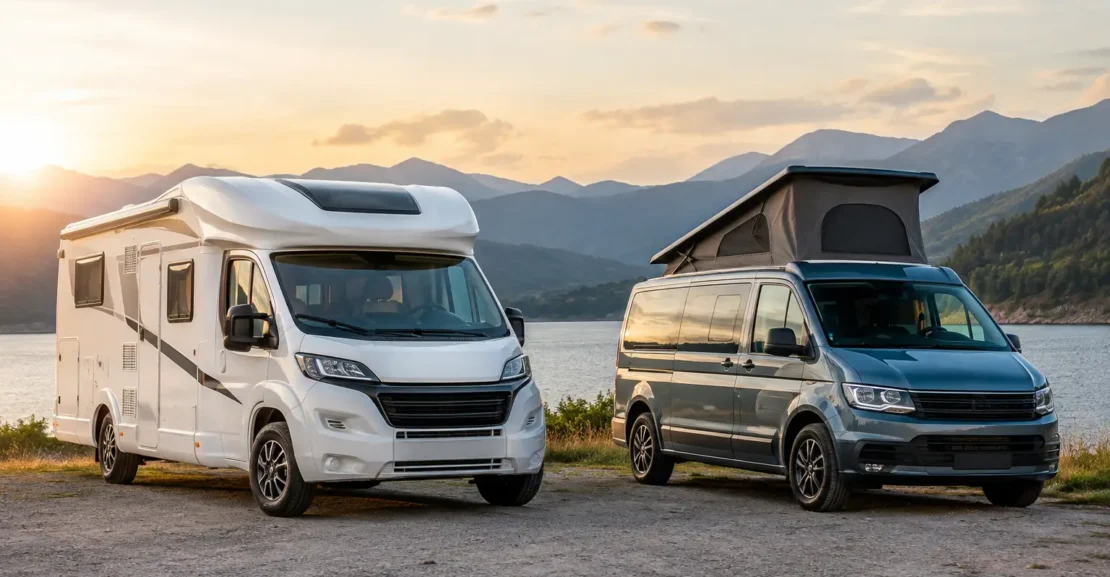
A wet jacket, muddy walking boots and two weeks of groceries quickly reveal whether an RV suits the way you actually travel. The motorhome versus campervan decision is not simply about vehicle length or how many beds you can fit inside. It is about how much comfort you want on the road, how confidently you want to drive, and whether your trips are spontaneous weekends away or extended tours around New Zealand.
Both can deliver the freedom to follow a fine forecast, stay an extra day by the beach, or take the scenic route home. The better choice is the one that feels manageable on day one and still works when your travel habits grow.
Motorhome versus campervan: the practical difference
A campervan is generally the more compact option. It is usually based on a van body, with living facilities built into the rear. Depending on the layout, it may include a bed, compact kitchen, storage, seating and sometimes a toilet or shower. Its main strength is versatility: it can often fit into an ordinary car park, feel less intimidating on narrow roads, and be used for everyday errands between trips.
A motorhome is typically larger and purpose-built around longer, more comfortable travel. It may be built on a cab-chassis, have an over-cab bed, or offer a wider coach-built living area. The extra size creates room for separate beds, a proper bathroom, a larger fridge, more bench space and generous storage. For many owners, it becomes a genuine small home rather than simply transport with a bed.
There is no universal size boundary, and listings can use the terms differently. Instead of relying on the label alone, look closely at the floorplan, vehicle dimensions, weight rating, amenities and storage. Two vehicles described as campervans can offer very different ownership experiences.
Start with how you want to travel
The most useful question is not, “Which is better?” It is, “What will our ordinary trip look like?” Picture loading up on a Friday afternoon, rather than an ideal summer holiday. Consider where you will park at home, how often you expect to move, whether you enjoy cooking inside, and how you cope with being indoors on a rainy day.
A compact campervan can be an excellent fit for solo travellers, couples taking shorter breaks, or buyers who place a high value on easy driving. If you want to visit small towns, use supermarket car parks without much fuss and travel lightly, a van-based layout can be liberating. It also suits people who prefer to spend most daylight hours outside and see the vehicle primarily as a comfortable base.
A motorhome often makes more sense for longer journeys, regular touring, or travellers who do not want to compromise on their living space. Retirees and pre-retirees who expect to travel for weeks at a time commonly appreciate a permanent bed, a separate shower and toilet, and space to sit comfortably without making up the bed every evening. Those features can make a major difference when the weather turns or you are staying in one place for several days.
Couples should also be honest about their routines. One person may be happy with a quick roadside coffee and a small bed, while the other wants a roomy bathroom and a place to read without rearranging cushions. The right RV should support both people’s version of a good holiday.
Living space is about layout, not only length
More metres usually provide more space, but a smart layout matters just as much. A well-designed campervan may feel open and practical for two people, while a larger motorhome with an awkward bathroom or limited kitchen bench can feel frustrating.
When viewing a vehicle, do more than stand at the door and admire the finish. Sit at the dinette, lie on the bed, open every locker and imagine preparing dinner. Check whether you can access the fridge, toilet and cupboards when the bed is made. If one person gets up earlier, can they make a coffee without disturbing the other? These are small details that shape everyday enjoyment.
Storage deserves particular attention. Motorhomes usually win here, with outside lockers for camp chairs, levelling gear, fishing equipment and larger personal items. Campervans require more disciplined packing, although clever under-bed storage and roof solutions can work well. If you travel with e-bikes, golf clubs, mobility aids, a barbecue or plenty of outdoor gear, measure it rather than assuming it will fit.
Driving, parking and confidence on the road
For first-time buyers, driving confidence can carry as much weight as the accommodation. A campervan generally feels more familiar, particularly when reversing, fuelling up, navigating tight holiday-park lanes or stopping at a café. Its compact footprint can make it easier to explore places where parking a larger vehicle would be inconvenient.
A motorhome asks more of the driver, especially in busy towns, on narrow rural roads and when reversing. That does not mean it is difficult or unsuitable. Many owners quickly adapt, particularly with good mirrors, a reversing camera and sensible route planning. Still, it is worth taking a proper test drive rather than relying on a quick lap around the block.
Check the vehicle’s height, width and length, then think about your usual driveway, garage or storage facility. Consider ferry bookings, parking at attractions and whether you will tow a small car. If you want a second vehicle for day trips once camped, a motorhome may suit a towing setup, but it also adds cost, weight and operational complexity.
Licence requirements and vehicle weight are another essential check. Many RVs can be driven on a standard car licence, but this depends on the vehicle’s gross vehicle mass and your licence conditions. Confirm the figures for the specific vehicle before committing, especially if you are considering a larger model or carrying substantial gear.
Cost goes beyond the purchase price
A campervan may have a lower purchase price than a comparable motorhome, but that is not always the case. Premium late-model campervans, particularly those with a bathroom, sophisticated electrics and quality conversion work, can be significant investments. Condition, service history, mileage, layout and equipment often matter more than the badge on the side.
Motorhomes may cost more to buy, insure, store and maintain, simply because they are larger and have more systems. A bigger fridge, bathroom, hot-water system, house batteries and appliances all add comfort, but they also need care. Diesel vehicles may involve road user charges, while fuel use varies widely according to size, engine, load and driving style.
Look at the full ownership picture: servicing, tyres, insurance, registration, Warrant of Fitness requirements, storage, battery replacement and repairs to habitation equipment. If you are financing the purchase, leave room in the budget for insurance and the practical extras you will need from the start.
The cheapest vehicle is not necessarily the best value. A well-maintained RV with documented servicing, sound seals, reliable appliances and a layout you genuinely enjoy can be a better purchase than a cheaper vehicle that needs immediate attention.
Facilities and freedom camping considerations
For many travellers, an onboard toilet and shower are high on the wish list. A motorhome is more likely to provide a separate bathroom with room to use it comfortably. In a campervan, the bathroom may be a compact wet area, a cassette toilet or no fixed facility at all.
Neither option is automatically better. If you mainly stay at holiday parks with good amenities, a compact campervan without a full bathroom may be entirely adequate. If you value independence, travel outside peak season or prefer not to rely on shared facilities, a motorhome’s self-contained setup can be worth the additional size and expense.
New Zealand freedom camping rules and certification requirements can change, and local council restrictions vary. Before buying, confirm that the specific vehicle has the certification and facilities needed for the places you intend to stay. Do not assume a previous owner’s setup will meet current requirements.
Inspection matters more than appearances
A tidy interior and shiny paintwork are encouraging, but they are not a substitute for a careful inspection. Check for signs of water ingress around windows, roof joins, skylights and external lockers. Test the water pump, hot water, fridge, heating, electrics, windows, door locks and all appliances. Ask for service records and establish when key maintenance was last completed.
For a motorhome, pay equal attention to the cab and the living area. For a campervan conversion, ask who completed the work, whether modifications are properly documented, and how safely systems have been installed. An independent pre-purchase inspection can provide useful reassurance, particularly for buyers new to RV ownership.
A guided viewing can also be valuable because it lets you ask practical questions in real time. At RVfinders, the focus is on matching buyers with an RV that suits their intended travel, then helping them understand how it operates before they head away.
Choose the RV that makes travel easier
If effortless driving, compact parking and simple getaways are your priorities, a campervan may be the right companion. If extended comfort, generous storage and a more complete home-on-wheels matter most, a motorhome may repay its extra size every time you settle in for the night.
Take your time, view more than one layout and trust the practical test: can you picture yourselves using this vehicle comfortably on an ordinary wet Tuesday in the middle of a long trip? The answer usually points you towards the RV that will make getting away feel easy.