
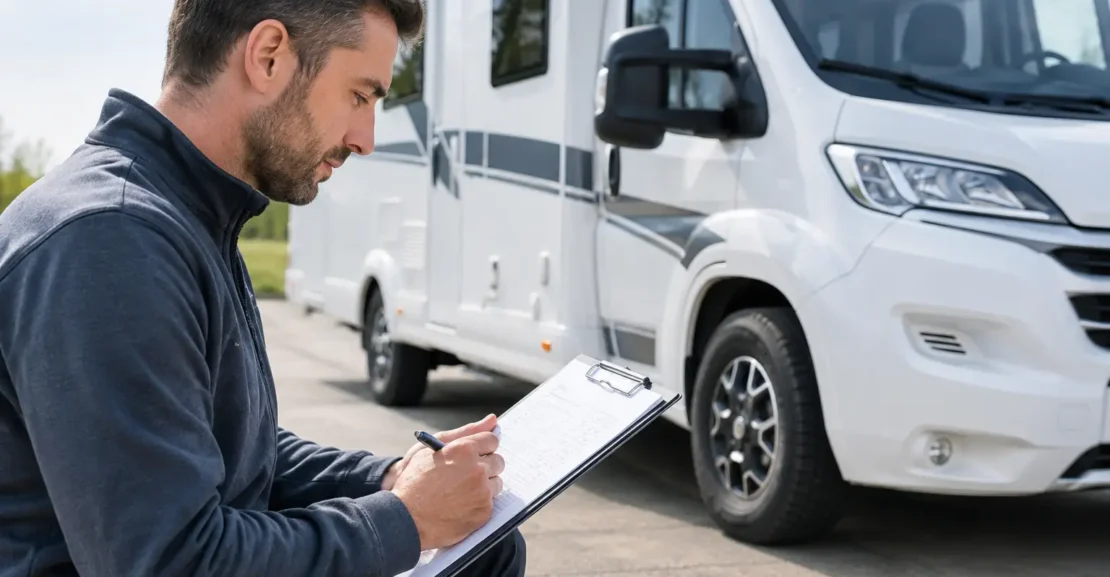
A shiny exterior, freshly valeted cabin and low odometer reading can all make a motorhome look like an easy choice. But a motorhome service history is often where the real story sits. It shows whether the vehicle has received consistent care, how problems have been handled and whether the previous owner treated it as a long-term home on wheels rather than simply a vehicle to use between holidays.
For a New Zealand buyer, service records are not about ticking a box. They provide useful evidence when you are comparing two otherwise similar motorhomes, deciding whether a price is fair or working out what maintenance may be coming next. A complete history does not guarantee a trouble-free future, but it gives you far more confidence than a vague assurance that it has been “well looked after”.
Why motorhome service history matters
A motorhome has more systems to maintain than an ordinary car. Alongside the engine, gearbox, brakes, tyres and suspension, there may be a house battery bank, solar system, water pump, gas appliances, fridge, toilet cassette, heating, roof seals and exterior awning. Some of these items are safety-critical. Others can turn into expensive and inconvenient repairs if small issues have been ignored.
Regular servicing suggests the owner has been proactive. It may show scheduled oil and filter changes, replacement of timing belts or chains where required, brake inspections and tyre dates. It can also reveal recurring faults. For example, repeated repairs to a cooling system or electrical charging issue deserve closer attention than a one-off repair that was properly resolved.
Records matter at resale too. When it is your turn to sell, buyers will generally feel more comfortable with a motorhome that has invoices, inspection reports and a clear maintenance timeline. Good paperwork supports the vehicle’s story and can make a sale smoother.
What to look for in a motorhome service history
Start with continuity. You are looking for a sensible sequence of servicing that broadly matches the motorhome’s age and mileage. Annual servicing is common for lower-mileage leisure vehicles, although the manufacturer’s schedule should always take priority. A vehicle that has travelled only a few thousand kilometres each year still needs attention, as fluids, seals, tyres and batteries can deteriorate with time.
Look beyond a stamped service book. A stamp is useful, but detailed invoices are better because they explain what was actually done. They may identify the workshop, kilometres at the time of service, parts fitted and any advisories raised. If a seller has a folder of paperwork, take the time to read it rather than simply checking that it exists.
The most helpful records commonly include:
- routine mechanical services, including oil, filters and fluid changes;
- timing belt replacement evidence, if the engine uses a belt;
- brake, suspension, tyre and battery work;
- receipts for repairs to cooling, charging or transmission systems;
- gas, electrical, water-system and appliance servicing where available; and
- documentation for water ingress repairs, resealing or roof work.
Not every motorhome will have every record, particularly an older vehicle that has changed hands several times. The question is whether the available documents create a credible picture of ongoing care.
Check dates as well as kilometres
Motorhomes often spend long periods parked up. This can be gentler on mileage, but it creates its own maintenance needs. Rubber components can age, tyres can develop flat spots or cracking, batteries can sulphate, and seals can dry out. A 15-year-old motorhome with 70,000 km may need just as careful an assessment as one with 170,000 km.
Pay particular attention to tyres. Tread depth is only part of the picture. Check their manufacturing date and condition, because older tyres may need replacement even if they have plenty of tread remaining. Similarly, ask when engine coolant and brake fluid were last changed, and whether the vehicle has been regularly started, driven and stored appropriately.
Match the records to the vehicle
The vehicle identification number, registration number, odometer readings and dates should make sense across the paperwork. Minor inconsistencies can occur, especially where a workshop has made a simple administrative error, but unexplained gaps or conflicting mileage deserve a clear answer.
It is also sensible to check that the service schedule matches the correct chassis and engine. Many motorhomes are built on Fiat Ducato, Mercedes-Benz Sprinter, Ford Transit or similar platforms, with a coachbuilt living area added afterwards. The mechanical service requirements come from the base vehicle manufacturer, while the living-area equipment has separate maintenance needs.
Do not overlook the habitation side
A clean mechanical history is valuable, but it is only half the picture. Water ingress is one of the biggest concerns in a motorhome. A small failed seal around a roof vent, window, marker light or awning rail can allow moisture into timber framing and insulation. By the time staining or a soft wall is visible inside, the repair can be substantial.
Ask whether the motorhome has had any damp checks, resealing work or repairs to the roof and body. A record of preventative resealing is usually encouraging. Evidence of a past leak is not automatically a reason to walk away either, provided the repair was carried out properly and there is no sign the issue remains. This is where a thorough inspection is worth far more than relying on paperwork alone.
Gas systems also deserve attention. Check that appliances ignite and operate correctly, and ask about servicing of the gas regulator, hoses, heater, hot water system and fridge. A gas certificate may not be available for every used vehicle, but a responsible seller should be open about what has been checked and what may need attention.
The same applies to 12V and 230V systems. Test lights, pumps, battery charging, solar input, fridge operation and power points where practical. Batteries have a limited lifespan, and a motorhome that appears fully equipped may still need a costly battery replacement or electrical fault-finding soon after purchase.
When missing records should concern you
A missing service book is not an automatic deal-breaker. Older motorhomes, private sales and vehicles imported years ago can have incomplete files for perfectly understandable reasons. What matters is the wider evidence.
If the motorhome is tidy, the owner can confidently explain its care, recent work is supported by invoices and an independent inspection is satisfactory, an incomplete history may be manageable. The price should reflect that uncertainty, particularly if major scheduled work cannot be verified.
The situation is different when records are missing and there are warning signs: neglected tyres, damp smells, corrosion, dashboard faults, poor battery performance, an owner who avoids direct questions or claims that every issue is “an easy fix”. In that case, the absence of history compounds the risk. It may be wiser to keep looking than to buy a project at a touring-motorhome price.
A timing belt is a classic example. If there is no proof it has been replaced within the manufacturer’s time and distance interval, budget to have it done promptly. Do not assume low kilometres remove the need. The same principle applies to tyres, fluids and batteries: if the age or condition is uncertain, allow for replacement rather than hoping for the best.
Use the history to ask better questions
Service paperwork is most valuable when it helps you have a practical conversation. Ask what the motorhome has been used for, where it has been stored and whether it has spent extended periods near the coast. Coastal storage can accelerate corrosion, while outdoor storage makes regular roof and seal inspections especially important.
Ask what the owner would do next if they were keeping it. Their answer can be revealing. They may say it is due for a service, new house batteries or an awning repair. None of those points necessarily rules out the motorhome, but they help you budget accurately and negotiate with clarity.
Also consider the vehicle’s Warrant of Fitness or Certificate of Fitness requirements, depending on its weight and classification. These checks are useful, but they are not a substitute for a pre-purchase inspection or a detailed review of maintenance. A current certificate confirms compliance at a point in time, not the full health of every mechanical or habitation system.
A practical approach before you commit
Before making an offer, review the records alongside a proper viewing and test drive. Check cold starting, steering, braking, gearbox behaviour and engine temperature. Inside, run taps, test appliances, look in cupboards and around windows for moisture marks, and inspect beneath floor coverings where possible. Take your time – a motorhome purchase should not be rushed because another buyer is waiting.
At RVfinders, we see the best outcomes when buyers look at the whole vehicle: condition, suitability, service history and likely future costs. The right motorhome is not always the newest or the one with the lowest odometer. It is the one whose condition and documentation give you a realistic, comfortable picture of ownership.
A well-kept folder of records cannot replace a careful inspection, but it can turn uncertainty into useful questions. That is a far better place to begin a journey than discovering the answers after the keys are in your hand.