
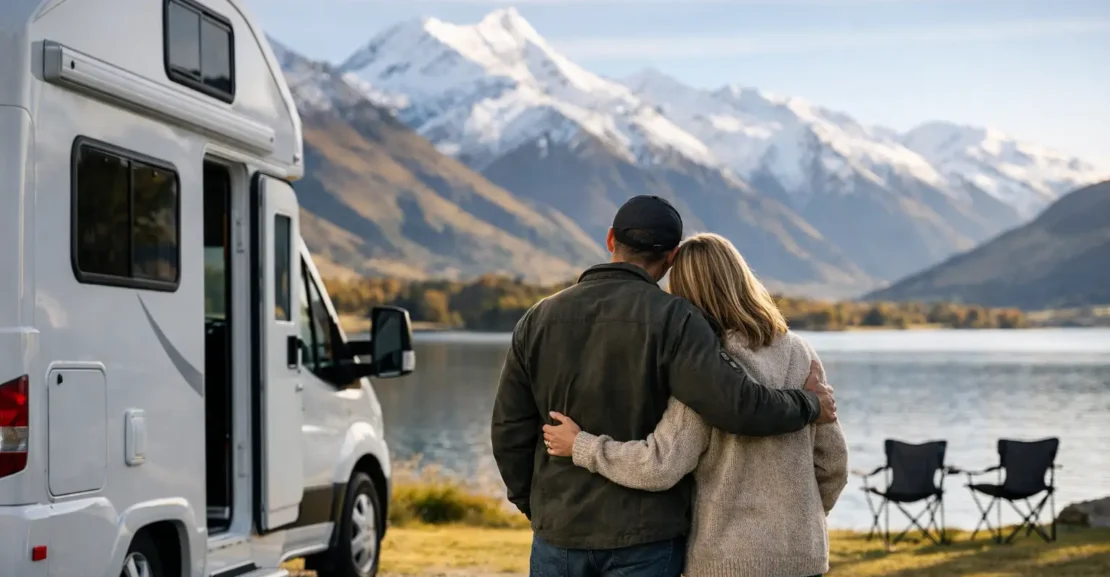
A motorhome can look ideal on a listing, then feel very different when you are reversing into a tight holiday park site, making the bed each night, or passing through a small South Island township. When buyers ask what motorhome size suits couples, the best answer is rarely a single length. It is the size that gives you enough living comfort without making every driving day feel like hard work.
For many New Zealand couples, the sweet spot sits between a compact campervan and a large coachbuilt motorhome. But your preferred travel rhythm, storage needs, confidence behind the wheel and plans for hosting family all matter just as much as the vehicle’s dimensions.
Start with how you will actually travel
Before comparing lengths, picture an ordinary day away rather than a highlight-reel holiday. Are you moving on every day, following the sun for several months, or staying in one place for a week at a time? Do you favour DOC campgrounds and smaller coastal sites, or mainly use full-service holiday parks? Will the motorhome be your weekend escape, or your home for an extended tour?
Couples who like spontaneous overnight stops and regular driving usually appreciate a shorter vehicle. It is easier to park at supermarkets, pull into viewpoints and negotiate narrow rural roads. Couples planning longer stays often value more room to relax indoors, particularly in winter or when weather keeps them off the bikes and walking tracks.
There is no benefit in buying space you seldom use if it limits where you feel comfortable taking the motorhome. Equally, a vehicle that feels cramped after three rainy days can take the shine off a lifestyle purchase. The right choice is a balance between road manners and liveability.
What motorhome size suits couples by travel style?
Compact campervans: around 5 to 6 metres
A compact campervan suits active couples who spend most of their time outside and want the vehicle to feel manageable in everyday situations. These models are often based on a van chassis, making them familiar to drive and relatively straightforward to park. They are a strong option for short breaks, solo touring as a couple, and travellers who want to explore towns as well as campsites.
The compromise is internal space. The kitchen may have limited bench room, the bathroom may be a compact wet area, and the bed may need to be made up daily. Storage can also become a pressure point once you add outdoor chairs, walking gear, fishing equipment, warmer clothing and food for several days.
A compact model can work brilliantly for two organised people. It may feel less appealing if one person needs a permanent bed, you both carry substantial gear, or you expect to spend long stretches inside.
Mid-size motorhomes: around 6 to 7.5 metres
For many couples, this is the most versatile category. A mid-size motorhome commonly provides a fixed bed, proper shower and toilet, usable kitchen, dining area and enough external storage for the practical items that make touring comfortable. You can settle in for a few nights without continually rearranging cushions, bags or bedding.
This size still requires care on narrow roads and when choosing a site, but it remains manageable for most drivers with sensible practice. A reversing camera, good mirrors and time spent becoming familiar with the vehicle make a meaningful difference. The benefit is that the motorhome starts to feel like a genuine small home rather than simply a vehicle with a bed.
If you are pre-retired or retired and planning several weeks or months on the road each year, a mid-size layout is often worth prioritising. It gives each person room to move without creating the driving and parking demands of a much larger vehicle.
Larger motorhomes: 7.5 metres and above
A larger motorhome can be exceptionally comfortable for couples who use it for extended travel, prefer generous living areas, or regularly take grandchildren away. There may be a separate bedroom, larger fridge, better wardrobe space, a roomy lounge and more tank capacity. For longer stays in holiday parks, that extra space can feel very worthwhile.
The trade-off is clear: larger vehicles need more planning. Some campgrounds have tighter access or limited suitable sites, town parking can be difficult, and scenic routes may not be as relaxing. You may also be more likely to bring a small car, scooter or e-bikes so you can explore once parked up.
These motorhomes suit the right owners, but bigger should not automatically be better. A large layout that stays parked for most of the trip may be perfect. For a couple who loves changing location every day, it can become more vehicle than they need.
Layout matters more than the number on the side
Two motorhomes of the same length can feel completely different. This is why an in-person inspection is so valuable. Stand in the kitchen while your partner uses the bathroom. Sit at the dinette with both seats occupied. Open the wardrobe, check the pantry and imagine where wet coats, shoes and laundry will go.
A fixed rear island bed is popular because it avoids nightly bed-making and gives each person easier access. However, it takes up valuable floor area. Twin single beds can offer excellent access and storage, particularly for couples with different sleep routines, while a drop-down bed can preserve daytime lounge space. The best arrangement depends on how you live, not which floorplan is currently fashionable.
Pay close attention to the bathroom. A separate shower is more comfortable for frequent use, but a compact wet bathroom may be entirely adequate if you mostly stay at parks with facilities. Likewise, a spacious lounge sounds appealing, yet it may be less useful than a practical kitchen if you enjoy cooking your own meals.
Storage deserves the same scrutiny. Ask whether there is room for two sets of clothing across different seasons, chairs, a barbecue, hoses, power leads, levelling equipment and any hobbies you plan to take. Overhead lockers are useful, but heavy items are better stored low and securely.
Think about driving confidence and running costs
The motorhome should suit the least confident driver, not only the person who expects to do most of the driving. Both partners should be comfortable with the seating position, mirrors, controls and visibility. Take time to assess how the vehicle feels on the road and when manoeuvring slowly. A slightly smaller motorhome that both of you are happy to drive creates more freedom on the trip.
Length is not the only consideration. Width, height, wheelbase and rear overhang all affect how a motorhome handles. A long wheelbase can improve stability, while a large rear overhang needs care around steep driveways and when turning. Check your licence requirements as well, particularly if the vehicle’s gross vehicle mass is above the standard car licence limit.
Running costs generally rise with size and weight. Fuel use, tyres, servicing, ferry fares, insurance and storage can all be higher for a larger motorhome. These are not reasons to avoid a bigger vehicle, but they should be part of an honest ownership budget. If you intend to travel extensively, comfort may justify the expense. If you expect a handful of weekends away each year, a more compact option may provide better value and be easier to keep in regular use.
Do not overlook the outside living space
New Zealand motorhome travel is often about what happens beyond the door: breakfast under the awning, a chair by the lake, bikes ready for a rail trail, or an evening meal beside the beach. A smaller interior can be perfectly comfortable when the weather is kind and your outdoor setup is practical.
Consider whether the motorhome has an awning, accessible external lockers and a sensible place for chairs and tables. If these items are difficult to retrieve, they tend to stay unused. Also consider self-containment needs, water and waste capacities, and how long you hope to stay away from services. More capacity can bring extra independence, but it also adds weight.
View with a checklist, then trust the feeling
A careful viewing should answer practical questions, but it should also reveal whether the space works for you as a couple. Spend time sitting separately, moving past one another in the aisle and testing the routines that matter. Can one person make a cup of tea while the other gets dressed? Is there a comfortable place to read when your partner is resting? Does the bed feel easy to access at night?
It is sensible to view more than one size category before deciding. A 6-metre campervan may confirm that compact is exactly what you want, or it may make the benefits of a fixed bed and larger bathroom immediately clear. At RVfinders, tailored viewings and practical walkthroughs can help couples compare these details without pressure or guesswork.
Choose the motorhome that will encourage you to leave home often, not the one that merely impresses on the forecourt. The best size is the one both of you can drive confidently, live in comfortably and look forward to taking down the road.