
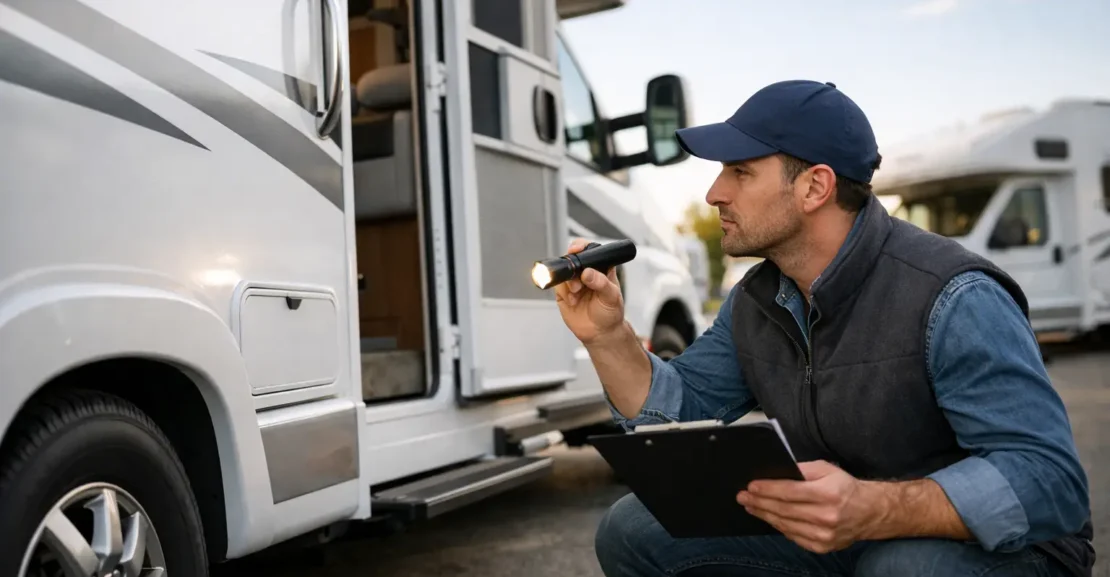
A motorhome can look immaculate on a sunny day and still hide a costly problem behind a cupboard, beneath the flooring or under fresh sealant. Knowing how to inspect a used motorhome means looking beyond the upholstery and layout to understand how it has been maintained, how it drives and whether it genuinely suits the way you plan to travel.
Take your time. A quality used motorhome is a significant lifestyle purchase, and a careful viewing is not being difficult – it is sensible. Ideally, inspect it in daylight, allow at least an hour, and ask the seller to have the vehicle connected to power and ready for a proper demonstration.
Start with the paperwork and vehicle history
Before focusing on the living area, establish the motorhome’s identity and maintenance record. Check the VIN and registration details match the vehicle, then look through service invoices, Warrant of Fitness history, manuals and receipts for repairs or upgrades. Consistent records usually tell a more useful story than a recent WoF alone.
Ask when the cambelt was last changed if the engine uses one, whether the vehicle has had regular servicing, and when the tyres and batteries were replaced. For diesel motorhomes, confirm the Road User Charges are current and ask about the vehicle’s fuel use in real-world touring conditions.
If the motorhome is self-contained, check that its certification is current and appropriate for the number of people who will use it. Also confirm the payload. A motorhome may have plenty of storage, but that does not mean it can legally carry every accessory, passenger and personal item you have in mind.
Inspect the body for water ingress
Water ingress is one of the most expensive issues in a used motorhome because moisture can damage framing, insulation, wall linings and floors long before it becomes obvious. Do not be embarrassed to inspect closely. This is where a thorough buyer protects their investment.
Walk slowly around the exterior. Look for cracked sealant, uneven panels, damaged corner mouldings, tired roof joins and signs of repairs around windows, hatches, awnings and marker lights. Fresh sealant is not automatically a concern, but ask why it was applied and whether there is an invoice for the work.
Inside, use your nose as well as your eyes. A musty smell, persistent deodoriser or damp carpet deserves further investigation. Press gently around window surrounds, roof vents, skylights, shower walls, overhead lockers and the base of external walls. Softness, staining, bubbling wallpaper, swollen timber or discoloured screws can point to previous or current leaks.
Check the roof, underbody and storage lockers
The roof is easy to overlook, yet it is exposed to harsh sun, rain and branches. If it is safe to do so, inspect it from a ladder or ask the seller to show you clear recent photos. Pay particular attention to seams, roof-mounted solar panels, air-conditioning units, vents and satellite fittings.
Open every external locker. The compartments should be dry, clean and free from mould. Look underneath the motorhome for corrosion, damaged underbody protection, oil leaks and any evidence of impact damage. Surface rust can be normal on an older vehicle, particularly near the coast, but heavy corrosion warrants professional advice.
Check the chassis, engine and tyres
A beautiful habitation area cannot make up for a tired mechanical base. Begin under the bonnet with the engine cold if possible. Look for fluid leaks, brittle hoses, corroded terminals and signs of neglected servicing. Check the engine oil and coolant condition, but remember that clean fluids do not replace a complete mechanical inspection.
Tyres need more than visible tread. Check their age code, sidewalls and wear pattern. Motorhomes often travel relatively low annual kilometres, so tyres can appear sound while being well past their ideal age. Uneven wear may indicate wheel alignment, suspension or steering issues. Confirm the spare is present, usable and accessible.
During a test drive, listen for rattles, squeaks, vibration, clunks and wind noise. The motorhome should start readily, brake in a straight line and track predictably on the road. Test it at town speeds and, where practical, at open-road speed. Make sure you are comfortable with its width, mirrors, turning circle and driving position. If it feels too large or demanding now, it will not become more relaxing when you are navigating a busy holiday park.
Test every system, not just the lights
A motorhome is both a vehicle and a compact home. Testing the living systems properly takes time, but it is essential. Ask for a demonstration rather than accepting a quick assurance that everything works.
Connect to mains power and check the charger, power points, lighting and any inverter. Run the water pump and open each tap, including the shower. Check for leaks beneath sinks, around the toilet cassette area and in service lockers. Turn on the hot water system and allow enough time to confirm it actually heats water.
Test the fridge on each available power source, such as 12V, 230V and gas where applicable. Run the heater, air-conditioning, cooker, extractor fan, television aerial, reversing camera and electric step. Open and close all windows, blinds, flyscreens, doors, drawers and cupboards. A loose catch may be minor; several failed fittings can suggest the vehicle has had hard use or limited care.
Check both house batteries and the starter battery, including their age and charging performance. If solar is fitted, ask to see the controller and its output. Battery replacement is a normal ownership cost, but it should be factored into your budget rather than discovered on your first trip away.
Look closely at the layout and practical condition
The right motorhome is not simply the one with the lowest kilometres or shiniest paintwork. It needs to work for your travel style. Sit at the dinette, make up the bed, stand in the shower and picture a wet afternoon inside. Can you access the bathroom with the bed made? Is there enough bench space for the way you cook? Can you safely reach the storage you will use most often?
If you are travelling as a couple, consider whether twin single beds, an island bed or a drop-down bed suits your routine. If you expect grandchildren or guests to join you, check certified seatbelts and sleeping arrangements rather than relying on a brochure description.
Also assess the small signs of care. Clean upholstery, functioning catches and organised service records usually reflect a conscientious owner. Conversely, a motorhome full of neglected jobs may still be a good buy at the right price, but only if you understand the work required and are comfortable taking it on.
Ask direct questions before making an offer
A transparent seller should be comfortable discussing ownership. Ask why they are selling, how the motorhome has been stored, whether it has had any accidents or water leaks, and what repairs they would address if they were keeping it. Ask what is included in the sale, from hoses and power leads to bedding, chairs, levelling ramps and annexes.
It is also sensible to ask whether there is finance owing on the vehicle and to complete the appropriate checks before payment. If anything feels unclear, slow the process down. A deposit should not replace due diligence.
Arrange an independent inspection when it matters
For many buyers, an independent mechanical inspection and a moisture assessment are worthwhile, particularly on an older or higher-value motorhome. These inspections do add cost, but they can identify issues that a viewing cannot. They also give you a clearer basis for negotiating fairly or deciding to walk away.
A broker-led viewing can make the process less daunting because you have someone who understands the vehicle, its systems and the questions buyers commonly miss. At RVfinders, the aim is to give buyers the time, explanation and practical guidance needed to choose with confidence.
The best used motorhome is rarely the cheapest one advertised. It is the one with an honest history, sound condition and a layout that makes you want to set off. Take the time to inspect it properly, then let the next trip be about the open road rather than unexpected repairs.