
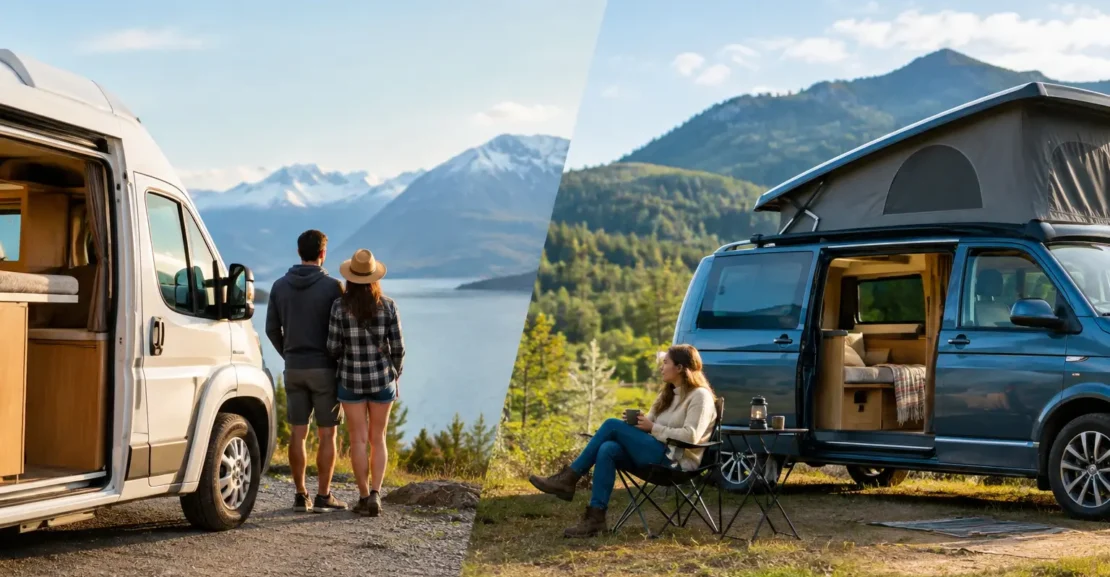
A summer loop through the South Island can make campervan life look wonderfully simple: wake beside a lake, make coffee with the doors open, and move on when you are ready. The bigger question comes afterwards. In the campervan rental vs ownership decision, the right answer is less about the dream itself and more about how often you will use the vehicle, where it will live between trips, and how involved you want to be.
For some travellers, renting keeps holidays easy and costs predictable. For others, owning turns spontaneous weekends, longer slow-travel trips and visiting family around the country into a much more accessible part of life. Both can be sensible choices when they match your circumstances.
Campervan rental vs ownership: start with your travel pattern
The clearest place to begin is not the purchase price. It is your likely number of nights away each year. A couple planning one two-week holiday annually may find renting better value and far less demanding. They can choose a vehicle suited to that particular trip, hand it back afterwards and avoid the responsibilities that sit quietly in the background of ownership.
Ownership becomes more compelling when travel is frequent or flexible. Perhaps you want to leave on a Friday afternoon for a long weekend, spend school holidays with grandchildren in another region, or take several months to travel after retirement. When the campervan is already packed, familiar and ready to go, those opportunities are easier to act on.
There is no universal break-even number of nights because rental rates, vehicle values, finance arrangements and running costs vary widely. Still, it is worth being honest about likely use. Buy for the lifestyle you will genuinely live, not only for the annual holiday you hope to take.
Renting suits occasional and changing needs
A rental can be a smart trial run before committing to ownership. It gives you first-hand experience of living in a campervan: making the bed, managing water, cooking in a compact kitchen, emptying waste tanks and finding your rhythm on the road. A layout that looks perfect in photos can feel very different after several wet days away.
Renting also suits travellers who want variety. One trip may call for a compact campervan that is easy to manoeuvre through towns and into smaller sites. Another may involve grandchildren, friends or extended time away, making a larger motorhome more comfortable. You are not tied to one floorplan or level of equipment.
The trade-off is availability and timing. Popular vehicle types can be booked well ahead for Christmas, school holidays and major events. Rates can also rise during peak periods, precisely when many people have time to travel. You will need to work around collection times, return dates and rental conditions rather than simply heading away when the weather looks promising.
Ownership suits freedom and familiarity
With ownership, the vehicle is arranged around your preferences. You can keep your preferred bedding, cookware, outdoor chairs and personal items onboard. You learn how every switch, tank, storage locker and appliance works. That familiarity matters, especially for people who value a relaxed start to a trip rather than repacking a vehicle each time.
A personally chosen campervan can also be fitted to your priorities. Some buyers need a north-south bed and an easy-access bathroom. Others place more value on a roomy lounge, a generous garage for e-bikes, solar capacity or a compact footprint that feels comfortable to drive. The best vehicle is rarely the one with the longest specification sheet. It is the one that makes your particular travel style easier.
Ownership does require a willingness to stay on top of care and maintenance. That includes servicing, tyres, batteries, seals, cleaning, WOF and registration requirements, insurance, and resolving the occasional unexpected issue. A well-maintained vehicle supports enjoyable travel and protects resale value, but it is still a commitment of time as well as money.
Look beyond the purchase price
Comparing a rental quote with a purchase price is tempting, but it does not give a complete picture. Renting generally bundles the vehicle, basic equipment and some support into a known holiday cost. You still need to allow for fuel, campgrounds, food and any optional extras, but there is no ongoing ownership bill once the trip is over.
Buying brings both upfront and continuing costs. Alongside the price of the campervan, allow for insurance, servicing, repairs, road user charges where applicable, storage and accessories. If finance is part of the plan, repayments and interest need to sit comfortably within your household budget, including during months when the vehicle is not being used.
Depreciation deserves a realistic place in the calculation. Like any vehicle, a campervan can lose value over time, although condition, mileage, service history, layout, make and market demand all influence eventual resale. Buying carefully and maintaining records can make a meaningful difference when it is time to sell or upgrade.
On the other hand, ownership can retain value in a way rental spending does not. At the end of a rental holiday, the cost is fully spent. At the end of several years of ownership, you may have a vehicle to sell, trade or continue enjoying. That does not make ownership automatically cheaper, but it changes the financial comparison.
The practical realities people underestimate
Storage is often the deciding factor. A campervan needs a safe, accessible place to live when it is not travelling. Measure your driveway, gate width and turning space before falling for a particular model. Check whether local rules, body corporate requirements or your insurance policy place conditions on where it is parked. Covered storage can be particularly valuable in protecting exterior finishes and seals, though it may add to annual costs.
Think about driving confidence as well. A larger motorhome can offer excellent living space, but it may feel less appealing on narrow roads, in busy supermarket car parks or when reversing into a site. A compact campervan is often easier to use for quick getaways, yet it asks more compromise from the interior layout. A proper test drive and a practical walkthrough are more revealing than a quick look around the cabin.
You should also consider the work involved before departure. Rental customers can usually collect a prepared vehicle and focus on their trip. Owners gain the benefit of keeping their campervan ready, but that readiness takes effort: checking tyre pressures, charging batteries, topping up gas, monitoring water systems and ensuring safety equipment is current.
New Zealand’s changing seasons add another consideration. If you mostly travel in summer, a rental may be enough. If you enjoy chasing autumn colour, winter events or quiet shoulder-season campgrounds, owning a vehicle with suitable heating, insulation and power systems can widen the periods you are comfortable travelling.
How to make a confident choice
Before choosing either path, write down the trips you expect to take over the next two or three years. Include likely duration, passenger numbers, preferred regions, whether you need space for bikes or mobility equipment, and how comfortable you are driving a larger vehicle. Then cost both options honestly, including the expenses that are easy to overlook.
If you are new to RV travel, renting first can be valuable research rather than a delay. Pay attention to the small details during the trip. Was the bed easy to access? Did you have enough bench space? Was the bathroom genuinely usable? Could you manage the vehicle confidently at a fuel stop or campground? These answers will help narrow your search far better than a brochure can.
If ownership is already the likely choice, avoid rushing into a vehicle just because it is available. Inspect condition carefully, ask about servicing and repairs, and make sure the layout suits how you live rather than how someone else travelled. A knowledgeable broker can help you compare suitable options, understand the practical trade-offs and approach a significant purchase with clearer expectations. At RVfinders, that personal guidance can include helping buyers match a vehicle to the journeys they actually want to make.
The best choice is the one that leaves you looking forward to the next trip, not worrying about a vehicle that is too costly, too large, too small or rarely used. Whether you rent for the occasional escape or own for a fuller life on the road, choose the arrangement that makes getting away feel possible.