
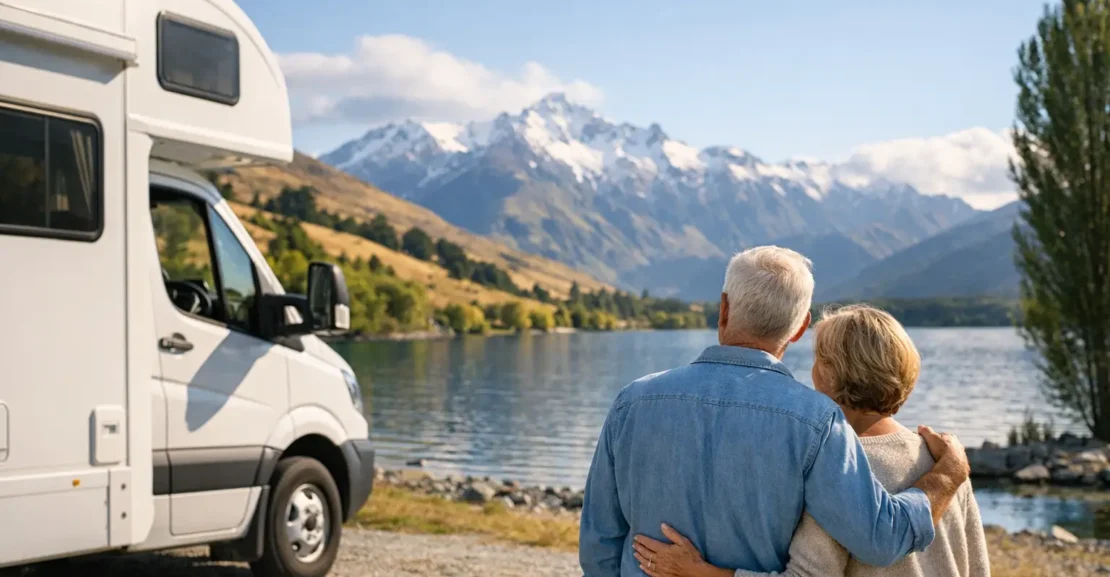
The best motorhomes for retirees are rarely the biggest, newest or most heavily optioned vehicles on the market. The right one is the motorhome that feels easy to live in on a wet morning in Taupō, comfortable after a long drive south, and practical enough that getting away for a week feels like a pleasure rather than a project.
For many New Zealanders, retirement brings the time to travel at a gentler pace, revisit favourite places and enjoy the freedom of changing plans when the weather does. A motorhome can make that lifestyle wonderfully accessible, but choosing one deserves more thought than simply picking a layout that looks appealing online. Comfort matters, certainly, but so do drivability, access, storage, servicing and the confidence to use the vehicle often.
What makes a motorhome retiree-friendly?
A retiree-friendly motorhome reduces effort without reducing independence. It should be straightforward to drive, park, set up and maintain, while giving you a comfortable place to relax at the end of the day. That balance will look different for every couple or solo traveller, which is why it pays to consider how you genuinely expect to travel rather than buying for an occasional imagined trip.
Start with your likely travel style. If you see yourselves moving every day or two, visiting small towns and stopping at freedom camping sites where permitted, a compact motorhome may suit you better than a large coachbuilt model. If you prefer staying several nights at holiday parks and travelling with family or friends, extra living space, larger tanks and generous storage may be worthwhile.
The best choice is often one that leaves a little room in the budget for improvements, servicing and the first year of ownership. A well-cared-for, sensibly equipped motorhome can offer more confidence than a newer vehicle with complicated features you may never use.
A layout that works after a full day on the road
A practical layout is more important than a fashionable interior. Walk through the motorhome as though you have just arrived at a campsite. Can one person make a cup of tea while the other uses the bathroom? Is there enough room to move around the bed? Can you sit comfortably without converting the lounge into a sleeping area every night?
For many retirees, a permanent rear bed is a strong preference. It avoids the daily task of making up bedding and makes daytime rests easy. An island bed offers access from both sides, which can be helpful for couples, although it may take up space that would otherwise be used for a larger bathroom or lounge. Twin single beds can be another excellent option, particularly where different sleep routines or mobility needs are a consideration.
Look closely at the bathroom, not just its presence on the specification sheet. A separate shower is convenient for longer trips, but check whether it is realistically usable. There should be sensible elbow room, a stable shower floor, secure handholds where appropriate and enough ventilation to manage condensation. A wet bathroom can work well in a compact vehicle, provided you are happy with the shower area also serving other functions.
Easy access is not a luxury
Low, well-lit entry steps and sturdy grab handles can make a substantial difference over years of ownership. Check the height of the first step, the width of the doorway and whether the flyscreen and door are easy to operate. Inside, assess the route from the cab to the rear of the motorhome. Narrow passages, raised floor sections and awkward corners are worth noticing before purchase, not after.
Seating should provide proper support rather than simply looking plush. Swivel cab seats are useful because they increase the lounge area without adding vehicle length. Try every seat for at least several minutes. Pay attention to seat height, armrests and whether your feet sit comfortably on the floor.
Kitchen usability deserves the same scrutiny. Benchtop space, reachable cupboards, a practical fridge and an easy-to-read control panel are often more valuable than a long list of appliances. If bending is becoming difficult, drawers may be preferable to deep low cupboards. An induction cooktop can be attractive, but only if the battery, inverter and electrical system are designed to support it.
Best motorhomes for retirees: choose the right size
Motorhomes are commonly discussed by length, but size is really about confidence. A vehicle that is too large for the roads, parking areas and campsites you want to use can limit the freedom you hoped to gain. On the other hand, a motorhome that is too compact may feel restrictive on a two-month trip.
A compact campervan or small motorhome, usually around six to seven metres, can be a sensible choice for solo travellers and couples who value manoeuvrability. These vehicles are easier to park in town, more approachable on narrower roads and often less intimidating for people returning to larger-vehicle driving. The trade-off is reduced storage and, in some models, a smaller bathroom or bed.
Mid-sized coachbuilt motorhomes offer a useful compromise for many retired couples. They can provide a permanent bed, separate shower, generous kitchen and comfortable lounge without becoming excessively difficult to handle. Their suitability depends on the chassis, turning circle and rear overhang, so a test drive is essential.
Larger A-class and luxury coachbuilt motorhomes provide excellent living space, often with superior insulation and substantial storage. They can be ideal for extended touring or those who spend weeks at a time in holiday parks. However, they demand more from the driver, cost more to run and may not suit every campsite or driveway. Bigger is only better when you are comfortable using it.
Driving confidence, licences and practical safety
Before falling in love with a layout, sit in the driver’s seat. Check sightlines, mirror coverage, seat adjustment and the location of essential controls. A reversing camera is valuable, but it should complement good mirrors and careful driving rather than replace them. Parking sensors, tyre-pressure monitoring and modern driver-assistance features can also provide reassurance, especially on unfamiliar roads.
New Zealand licensing requirements should be checked against the motorhome’s gross vehicle mass, or GVM. Many popular motorhomes can be driven on a standard car licence, but heavier vehicles may require a different licence class. Do not rely on the vehicle’s appearance or a seller’s assumption. Confirm the plated weights and make sure the motorhome remains legal once passengers, water, fuel, luggage, bikes and accessories are on board.
Payload is one of the most overlooked figures in a motorhome purchase. A vehicle may look spacious, yet have limited carrying capacity after factory options are included. Ask for clear information on tare weight, GVM and what equipment is included in that tare figure. Travelling overloaded affects safety, handling, tyre wear and insurance considerations.
A professional pre-purchase inspection is particularly worthwhile for older motorhomes and imported vehicles. It can identify moisture ingress, chassis concerns, appliance faults and maintenance issues that are difficult to spot during a viewing. Service records, evidence of regular habitation checks and documentation for upgrades such as solar, batteries or towing equipment all help build a clearer picture.
Comfort off-grid and at holiday parks
Retirement travel often means mixing holiday parks with more self-contained stays. Your preferred balance should shape the motorhome’s electrical and water setup. If you mainly stay at powered sites, a simple system with reliable mains charging may be all you need. If you plan longer off-grid stays, solar capacity, battery condition, water storage and efficient heating become far more significant.
In New Zealand, insulation and heating deserve serious attention. A motorhome that feels lovely in summer can be uncomfortable on a South Island autumn trip if it has poor insulation, insufficient heating or limited ventilation. Check for signs of condensation around windows and cupboards, and ask how the heating system is fuelled, serviced and controlled.
Diesel heating is popular for its effectiveness, while gas systems remain common and practical. Neither is automatically better. The key is understanding the running costs, maintenance requirements and whether the system suits your travel habits. A clean, simple setup you understand is usually preferable to a complicated arrangement that feels unfamiliar.
Storage is another quiet marker of long-term comfort. Consider where outdoor chairs, levelling ramps, coats, groceries, hoses, tools and personal items will go. External lockers are helpful, but they need to be accessible without heavy lifting. Inside, make sure frequently used items can be reached without climbing, stretching or emptying half a cupboard.
Take your time before committing
A motorhome is both a vehicle and a small home, so it should be assessed in both ways. Visit in daylight, open every locker, sit at the dining table, lie on the bed and test the shower space. If possible, arrange a proper test drive on roads that include town traffic, open highway and a few tighter turns. The vehicle should feel composed rather than merely manageable.
It also helps to view more than one type of motorhome before deciding. Seeing different layouts side by side quickly reveals what matters most to you, whether that is a larger lounge, a permanent bed, a spacious shower or a vehicle that feels easy to park outside the local café.
A good broker can make this process less daunting by listening to how you intend to travel, explaining the practical trade-offs and helping you look beyond a polished interior. At RVfinders, that personal guidance is central to finding a motorhome that suits the journey ahead, not just the day of purchase.
The right motorhome should encourage you to make plans, even small ones. Choose the vehicle that feels comfortable to take away on a Friday afternoon, because those unhurried weekends often become the beginning of the trips you will remember most.