
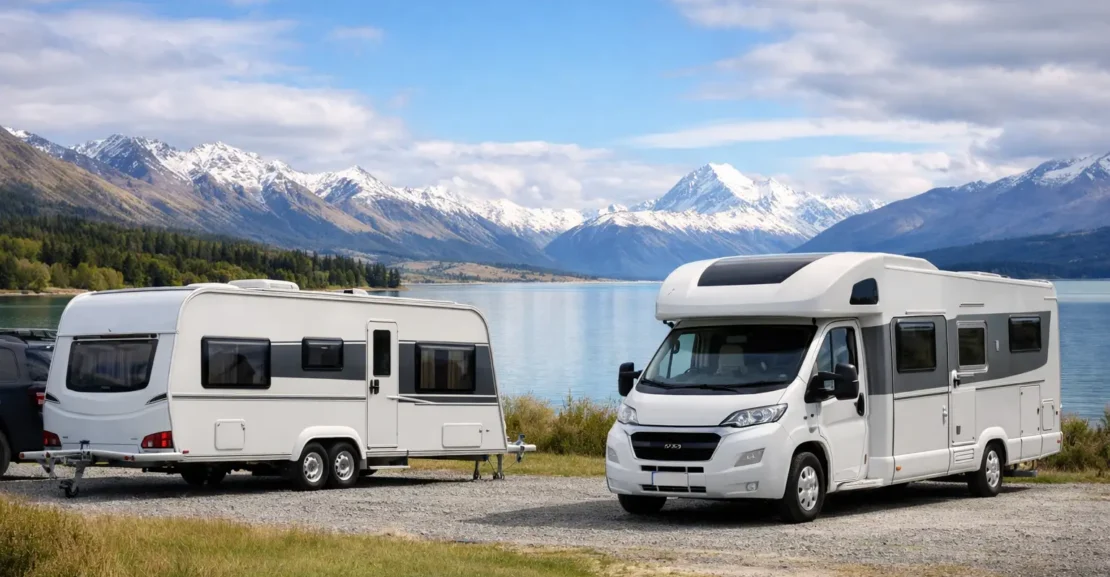
A lot of buyers start with the same question: caravan vs motorhome NZ – which one will actually suit the way we travel? It sounds simple until you picture real trips. A long weekend in the Coromandel feels very different from a month working your way through the South Island, and the right choice often comes down to how you like to move, park, stay and spend.
There is no universal winner here. Some travellers love the flexibility of towing a caravan and unhitching at camp. Others would never go back after the convenience of pulling up in a motorhome and having everything in one vehicle. The better option is the one that fits your habits, confidence level and budget, not the one that looks best in a brochure.
Caravan vs motorhome NZ: the core difference
The biggest difference is straightforward. A caravan is towed behind a suitable vehicle, while a motorhome is self-contained and drives as one unit. That single distinction affects almost everything else – purchase price, running costs, campsite setup, storage, maintenance and even how relaxed you feel on the road.
A caravan can make excellent sense if you already own a capable tow vehicle or are happy to buy one. Once you arrive at your destination, you can unhitch and use the car on its own for sightseeing, shopping or heading into town. For many New Zealand travellers, that day-to-day convenience is a major advantage.
A motorhome, on the other hand, is often easier when you’re moving frequently. You stop, park, put the kettle on and settle in. There is no hitching up before every leg of the trip, and no learning curve around reversing a trailer. For couples planning to cover a lot of ground, that simplicity can be very appealing.
Think about how you actually travel
Before looking at layouts and features, it helps to be honest about your travel style. If you like setting up in one spot for several days or even a few weeks, a caravan often feels more practical. You can establish a comfortable base and still use your vehicle independently.
If you prefer touring, changing locations every night or two, a motorhome usually makes life easier. Packing up tends to be faster, roadside stops are simpler, and the whole trip can feel less like a process and more like a journey.
This is where many first-time buyers get clarity. They start by comparing vehicles, but the real question is whether they are campers who tour, or tourers who camp.
Cost is more than the purchase price
Price matters, but it helps to look beyond the headline number. Caravans are often less expensive to buy than motorhomes of a similar age and comfort level. That can make them an attractive entry point, especially for buyers who want space without stretching the budget too far.
Still, a caravan is only part of the equation. You may need a tow-rated vehicle, towing equipment, brake systems and, in some cases, upgrades to drive safely and legally. If you do not already own the right vehicle, the overall cost can climb quickly.
Motorhomes generally cost more upfront, but they combine your travel and accommodation vehicle in one. You are not maintaining a separate tow car for the purpose of the trip unless you choose to bring another vehicle with you. Insurance, registration, servicing and fuel all need to be considered, but for some buyers the all-in-one setup still stacks up well.
There is also resale to think about. Well-maintained caravans and motorhomes both hold appeal in New Zealand, but demand can shift depending on market conditions, layout, brand and condition. Choosing the right RV for your needs now usually puts you in a better position later than chasing a trend.
Driving and confidence on the road
This is one of the most practical parts of the decision. Some people are perfectly comfortable towing. Others are not, and there is no point pretending otherwise. If reversing a trailer, watching towing weights and managing crosswinds sounds stressful, a caravan may not be the relaxing option you hoped for.
Motorhomes remove towing from the picture, but that does not automatically make them easy for everyone. They can be longer, wider and taller than what many people are used to driving. You need to think about narrow roads, tight holiday park entrances, low clearances and everyday parking.
The key is confidence. A buyer who is calm and capable with a caravan setup may find it ideal. A buyer who wants fewer moving parts and simpler manoeuvring may feel more at home in a motorhome. Experience helps, but honest self-assessment helps more.
Living space and comfort
A caravan often delivers impressive interior space for the money. Because there is no driver’s cab taking up room in the living area, layouts can feel more residential. Many caravans offer generous seating, roomy beds and practical kitchens, which suits longer stays and buyers who value comfort at camp.
Motorhomes can also be very comfortable, especially in well-designed layouts, but the available space is often used differently. The front cab becomes part of the living area when parked, which is efficient, but not always as roomy as a comparable caravan. If indoor space is high on your priority list, this is worth inspecting in person rather than guessing from floorplans.
Storage matters too. Think about clothing, outdoor chairs, tools, food, bedding and the bits and pieces that come with longer travel. What looks spacious on a quick viewing can feel tight after a week away.
Freedom camping, campsites and setup
In the caravan vs motorhome NZ conversation, campsite use often gets overlooked. Where you want to stay has a real impact on what will work best.
Motorhomes are often favoured by travellers who want self-contained capability and the flexibility to stop more spontaneously, subject to local rules and certification requirements. They are quick to set up and well suited to moving from place to place.
Caravans work brilliantly in holiday parks, campgrounds and places where you plan to settle in. Once levelled and connected, they can feel like a proper home base. The trade-off is that popping out for groceries or a scenic drive means using the tow vehicle, not just turning the key and going from your campsite in one unit.
If your ideal trip includes lots of park-ups with minimum fuss, a motorhome has an edge. If your trips are more about staying put and exploring from one base, a caravan deserves serious consideration.
Maintenance and ownership reality
Every RV needs care. The difference is where that care sits.
With a caravan, the habitation side is separate from the tow vehicle. That can simplify some aspects of ownership, especially if your car is already serviced through your usual mechanic and your caravan maintenance is handled separately. On the other hand, you are still looking after two important assets.
With a motorhome, the house and vehicle are integrated. That can be convenient, but when the vehicle is in for servicing or repairs, your accommodation goes with it. For some owners that is no issue. For others, especially those travelling regularly, it is worth thinking about.
Water ingress, appliance condition, tyre age, suspension, brakes and electrical systems all matter. This is why careful inspection is so important whether you are buying a caravan or a motorhome. A polished exterior should never be the reason you buy.
Who usually suits a caravan?
A caravan often suits buyers who want more living space, plan to stay longer in each location, and like the idea of unhitching and using their vehicle independently. It can also suit families or couples who are cost-conscious but still want comfort.
It is particularly appealing if you already own a suitable tow vehicle and are comfortable towing. In that case, the value proposition becomes much stronger.
Who usually suits a motorhome?
A motorhome often suits buyers who want easy touring, quick overnight stops and an all-in-one travel setup. It is popular with couples doing extended trips around New Zealand, especially when convenience matters more than maximum interior room.
It also suits buyers who do not want the complexity of towing, hitching and trailer manoeuvring. For many people, that reduction in effort changes the whole ownership experience.
The best choice is the one that removes friction
When buyers are torn between the two, the deciding factor is often not luxury or image. It is friction. Which option will ask less of you, more often? Which one makes it easier to head away for a few days without turning the trip into a project?
That is usually where the right answer appears. A caravan can be the better buy on paper but still feel cumbersome for your style of travel. A motorhome can cost more yet deliver greater value if it gets used more often and with less effort.
At RVfinders, we often see that confidence grows when buyers stop asking which RV is best, and start asking which RV fits their real life. If you choose with that lens, you are far more likely to enjoy ownership from the first trip.
The smartest next step is not rushing to a decision. Walk through both, picture a wet day, a tight campsite, a supermarket stop and a three-week trip, then choose the one that still feels easy.