
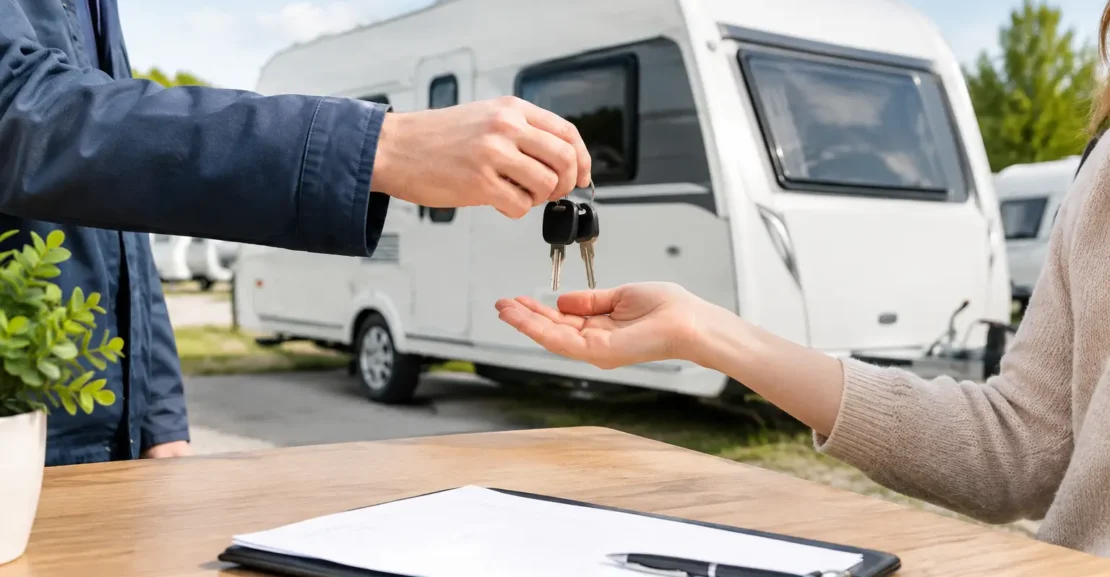
A caravan can look immaculate on collection day and still leave room for uncertainty if the paperwork is incomplete. The right caravan handover documents turn a verbal agreement into a clear record of what has been sold, what has been checked and what the new owner needs to enjoy their first trip with confidence.
For private sales especially, handover is more than exchanging keys. It is the point where ownership details, equipment, maintenance history and practical know-how should all line up. A well-organised document pack protects both parties and makes the sale feel as considered as the caravan itself.
Why caravan handover documents matter
A caravan is a significant lifestyle purchase. Buyers want to know that the caravan is the one they inspected, that its roadworthy requirements are current, and that the appliances and systems are understood. Sellers want a record that payment has been received, the caravan has been collected and the agreed items have gone with it.
Good paperwork also avoids awkward calls after the sale. If a buyer believes an annex, gas bottle, spare wheel or portable toilet was included, the signed inventory gives everyone an answer. If a service was completed shortly before sale, the invoice supports that claim. These are small details until they are not.
The exact documents will depend on the caravan’s age, value, equipment and whether it is being sold privately or through a broker. A simple older caravan may need a leaner pack than a late-model caravan with solar, lithium batteries, an electronic stability system and a full annexe. The principle remains the same: document the items that affect ownership, safety, value and use.
The essential caravan handover documents
A signed sale and purchase agreement
The sale and purchase agreement is the foundation of the handover. It should identify the buyer and seller, the caravan by make, model, year and registration number, and ideally include the vehicle identification number where applicable. Record the agreed purchase price, deposit, balance, payment method and collection date.
It should also state whether the sale is subject to any conditions, such as a pre-purchase inspection, finance approval or the repair of a specified item. If the caravan is sold on an as-is, where-is basis, that needs to be written clearly, while still reflecting any representations made during the sale.
A condition report is particularly useful. This does not need to be overly complicated, but it should note visible damage, known faults and any items awaiting attention. Honest disclosure builds trust and gives the buyer a realistic starting point for ownership.
Proof of payment and a receipt
Once funds have cleared, provide a signed receipt showing the amount paid, date, caravan identification details and names of both parties. Bank transfer confirmation is useful too, but it does not replace a proper receipt that clearly ties the payment to the caravan sale.
For a buyer, confirmation that cleared funds have been received before collection removes uncertainty. For a seller, it is sensible not to release the caravan, keys or registration paperwork on the strength of a pending payment screenshot alone.
Registration and ownership transfer records
New Zealand buyers and sellers should complete the required change of registered person process with NZTA promptly. This is separate from a private agreement between buyer and seller. Both parties should retain confirmation that their part of the transfer has been completed.
Check that the registration label details match the caravan being handed over. If the caravan’s warrant of fitness is current, provide the relevant documentation or clearly record its expiry date. If either is due soon, it is better to discuss that before settlement rather than leave the buyer to discover it after taking the caravan home.
Registration is not proof of legal ownership in every circumstance, which is another reason a signed agreement and receipt matter. Where there is any finance owing or uncertainty over ownership, resolve it before handover. A buyer should not be left trying to untangle someone else’s obligation after the caravan is in their driveway.
Service, repair and inspection history
Service records help a buyer understand how the caravan has been cared for and what may be due next. Include invoices for wheel bearings, brakes, tyres, suspension, coupling work, roof resealing, appliance repairs and electrical upgrades. If the caravan has had a recent independent inspection, include that report as well.
The history does not need to be perfect to be valuable. A well-kept folder of invoices often tells a more reassuring story than a vague assurance that the caravan has been maintained. If records are incomplete, say so plainly. Transparency is more useful than trying to make an older caravan appear newer than it is.
For caravans with gas appliances, provide any gasfitting certificates, compliance documentation or recent repair invoices available. Electrical work and solar upgrades should also be supported by relevant paperwork where supplied. These records can assist with safe use, future maintenance and resale.
A detailed inventory of included items
The inventory should list what is included in the agreed price. Be specific, particularly where the caravan is sold with accessories that are easy to overlook at collection. This can include:
- Keys, remote controls, security fobs and hitch locks
- Awning, annexe walls, poles, pegs, ground mat and tie-down straps
- Gas bottles, battery charger, solar gear and power leads
- Spare wheel, jack, wheel brace, levelling ramps and towing mirrors
- Fresh-water hoses, waste-water equipment and portable toilet accessories
- Manuals, appliance booklets and any spare parts kept with the caravan
Add the condition of higher-value items where it is relevant. For example, note whether gas bottles are supplied full, partly full or empty, and whether an annexe has known tears or missing clips. Both parties should check the inventory together and sign it at handover.
Documents are only part of a proper handover
A folder of paperwork is valuable, but it cannot replace a practical walkthrough. The buyer should be shown how to hitch and unhitch the caravan, use the handbrake, operate the stabiliser legs and connect power and water. If the caravan has a mover, electronic brake controller, solar management display or diesel heater, take the time to demonstrate it.
This is also the right moment to explain what works differently from a house. A caravan’s water pump, battery capacity, toilet cassette and gas system all need sensible use. A five-minute demonstration can prevent a frustrating first night away.
Where possible, complete the handover in daylight and allow enough time. Rushing through it in the rain, at the side of a busy road or after dark is rarely ideal. Buyers should inspect the caravan before making the final payment, while sellers should have the paperwork and accessories laid out ready to check off.
A few photos taken at collection can be useful too. Photograph the caravan’s exterior, registration label, keys and major included accessories. They are not a substitute for signed documents, but they create a simple record of the caravan’s condition and contents at the point of handover.
A practical handover pack for buyers
Buyers should leave with originals where appropriate and digital copies of the full pack. Keep the documents together in the caravan or scan them into a secure folder. The next service, insurance query or future resale will be easier when the history is already organised.
Before towing away, check that the caravan is insured from the moment it becomes your responsibility. Confirm the towing vehicle is suitable for the caravan’s loaded weight and that your towing equipment, electrical connection and brake setup are appropriate. The excitement of collection should not override the basics of safe travel.
For first-time owners, a broker-led handover can be particularly worthwhile. At RVfinders, the focus is not simply on matching a buyer with a caravan, but on helping them understand the vehicle they are taking on the road. That personal guidance can make the paperwork, systems and first towing experience far less daunting.
The best handovers feel unhurried and transparent. When every document is in place, every included item is accounted for and the buyer knows how the caravan works, collection day becomes what it should be: the beginning of many good trips away.