
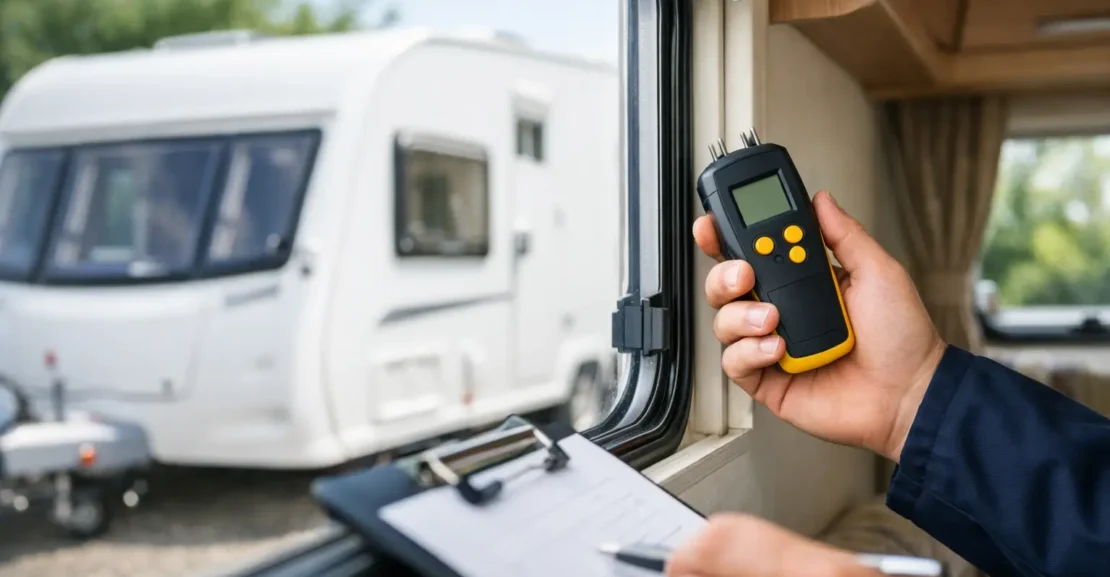
A caravan can look immaculate on a sunny day and still be carrying a costly secret behind the wall lining. A soft corner near a window, a faint musty smell or a slightly lifted vinyl floor can all point to water getting where it should not. Caravan moisture testing gives buyers and sellers a clearer picture of what is happening beneath the surface, before a small concern becomes a difficult negotiation or an unexpected repair bill.
For New Zealand travellers, this matters. Caravans spend time in coastal air, heavy rain, frosty mornings and long periods parked up between trips. Seals, roof penetrations and exterior fittings work hard. A proper moisture check is one of the most useful steps you can take when buying, selling or maintaining a caravan.
What caravan moisture testing actually tells you
A moisture test uses a specialist meter to identify elevated moisture levels in materials behind interior surfaces. Most caravan bodies contain timber, composite panels, insulation, adhesives and linings. If water enters through a failed seal or damaged exterior panel, it can be absorbed into those materials long before visible staining appears.
The tester takes readings at a series of points around the caravan, creating a pattern rather than relying on one number. Common test areas include window surrounds, roof joins, front and rear corners, service hatches, vents, exterior lights, awning rails, wheel arches, shower walls and the floor around doors.
Readings need interpretation. Meter scales differ, and a higher reading does not automatically mean major structural damage. A cold surface, metal framing, recent cleaning, condensation or a repair using different materials can affect a result. What matters is the location, the spread of the reading, the construction of the caravan and whether there are supporting signs such as softness, staining, bubbling wallboard or deteriorated sealant.
A professional assessment should therefore be treated as evidence to investigate, not a simple pass-or-fail certificate. It provides a valuable starting point for a sensible conversation about condition, repairs and price.
Why hidden moisture is expensive
Water rarely stays close to the point where it entered. A minor leak around a roof vent can travel along framing or insulation, soaking timber in a wall or floor. Over time, this may lead to rot, mould, delamination, corrosion and weakened fixings. By the time an interior wall feels soft, the affected area can be much larger than expected.
Repair costs depend on access and construction. Resealing a window may be straightforward if the issue is found early. Rebuilding a corner, replacing floor sections or removing internal furniture to repair framing is a different proposition. It can also affect whether a caravan is practical to insure, finance or resell without a clear repair history.
This does not mean every elevated reading should end a purchase. A well-documented repair completed properly can be acceptable, particularly on an older caravan priced accordingly. The key is transparency. You want to know what happened, how far the moisture spread, what work has been done and whether the affected area is now dry and sound.
When to arrange a moisture test
The best time for caravan moisture testing is before you commit to buying. Ideally, arrange it early enough that the findings can inform your decision, rather than after a deposit has been paid and collection is imminent. If you are comparing several caravans, a thorough test on the one you are serious about is money well spent.
Sellers benefit too. Testing before listing gives you the chance to address small sealing issues, gather records and present the caravan with confidence. If a buyer raises a concern later, you are not left guessing about its condition. Honest documentation supports a smoother sale and helps protect the value you have built into your caravan.
Annual testing is also worthwhile for owners, especially if the caravan lives outside, has been through a wet winter, or is regularly towed on rough roads. Arrange a check after any event that could compromise the body shell, such as an impact with a branch, a damaged roof vent, a cracked window or an unexplained internal damp smell.
What a careful inspection should include
A moisture meter is only one part of a useful inspection. A competent assessor will combine meter readings with a close visual and hands-on examination. They should look for signs of old or active leaks, assess the condition of sealants and check whether panels, floors and fittings feel secure.
Ask how the readings are being recorded and whether you will receive the results in writing. A good report identifies the test locations, explains any areas of concern and distinguishes between a minor maintenance issue and something requiring further investigation. Photographs are helpful where there is visible evidence.
There are several questions worth asking before booking:
- Is the inspection designed for caravans, rather than a general building moisture check?
- Will the roof, corners, openings, floor edges and wet areas all be tested?
- Are the readings explained in the context of the caravan’s age and construction?
- Will you receive a written record of concerns and recommended next steps?
- Is the tester independent of any repair work they may later quote for?
No inspection can see inside every closed cavity, and no tester can promise that a future leak will not develop. But a methodical inspection substantially reduces the chance of buying blind.
Reading the result without overreacting
If elevated readings are found, pause before deciding what they mean. Start by asking whether the area feels soft, whether there is evidence of staining or distortion, and whether the readings are isolated or repeated around nearby joints. A single high point near a metal fitting may need a second check. A run of elevated readings around a front window deserves more attention.
Request repair invoices if the seller says the problem has already been resolved. The most reassuring records describe the work completed, rather than simply stating that the caravan was resealed. If significant repairs were undertaken, ask whether the affected materials were removed and replaced, not merely dried and covered over.
For a purchase, the options usually come down to negotiating a price that reflects the repair, asking the seller to complete agreed work before settlement, or walking away. Which choice is right depends on the caravan’s overall condition, rarity, age, asking price and your appetite for a project. A layout you love does not make hidden structural work cheaper, so keep the decision grounded in evidence.
Simple habits that prevent moisture problems
Most caravan leaks begin at joints and penetrations, not in the middle of a wall. Regular care goes a long way. Keep the roof clean enough to inspect, clear debris from around vents and check sealant for cracks, lifting edges or gaps. Pay attention to windows, marker lights, grab handles, hatches and awning rails, as these are common places for seal failure.
Ventilate the caravan when practical, particularly after cooking, showering or storing it for a period. Condensation is different from a water leak, but it can create damp conditions that make an interior feel unhealthy and can confuse early warning signs. If you notice a musty odour or repeated condensation in one spot, investigate rather than masking it with deodoriser.
When washing the caravan, look closely at how water runs off the roof and around openings. A careful owner often spots a failing seal during routine cleaning, well before the damage reaches the interior.
A better way to buy and sell with confidence
A caravan is more than a towable asset. It is the base for weekends away, longer journeys and the freedom to change plans when the weather turns. Its condition deserves the same thoughtful attention as its layout, towing weight, appliances and service history.
At RVfinders, a considered purchase process includes asking the practical questions early, so buyers can focus on finding a caravan that suits their travel plans rather than inheriting surprises. For sellers, being open about condition and maintenance creates trust with the next owner.
If moisture testing identifies an issue, do not let uncertainty rush you. Get clear information, understand the likely scope of work and make a decision that feels right for the caravan and the journeys you want it to take you on.