
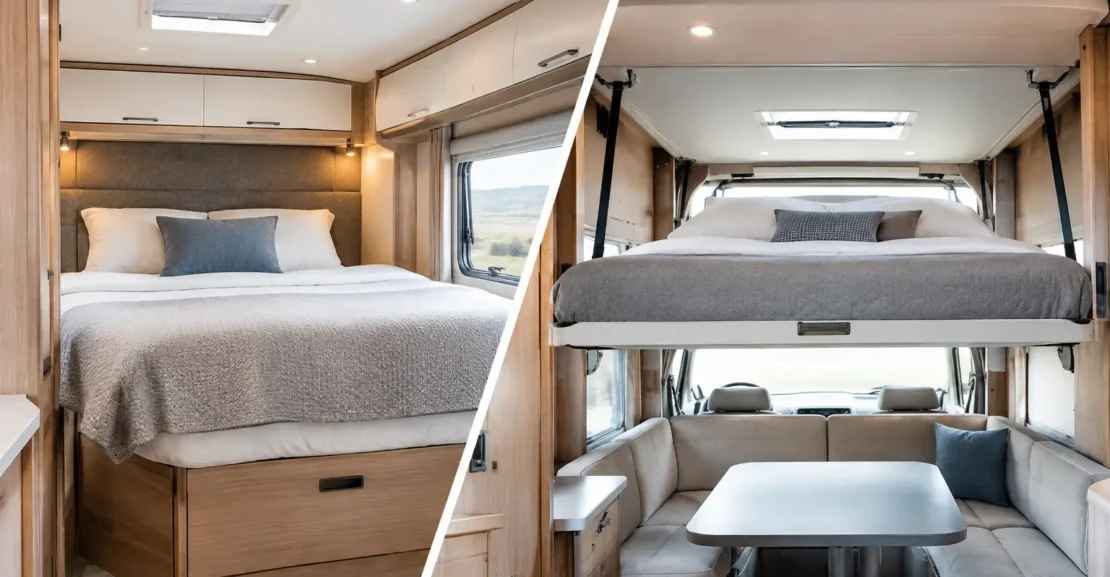
A bed layout can make or break the way you use a motorhome. The fixed bed versus drop-down bed decision is not simply about where you sleep. It affects how much living space you have during the day, how quickly you can get settled at night, storage capacity, payload, and whether the vehicle still feels right after several weeks on the road.
For some travellers, a ready-made bed is non-negotiable. For others, reclaiming that space during the day makes a compact motorhome feel considerably more practical. The best choice depends on how you travel, how long you stay away, and how willing you are to set up and pack down each day.
Fixed Bed Versus Drop-Down Bed: The Core Difference
A fixed bed stays in place at all times. It is usually positioned at the rear of the motorhome, either at floor level, above a garage-style storage area, or as an island bed with access around both sides. You can leave the bedding in place and use the bed whenever you need it.
A drop-down bed, also called a drop-down or electric bed, is raised near the ceiling while travelling and during the day. At bedtime, it lowers over the front lounge or dinette. Depending on the model, it may operate electrically or manually, and some allow the bed to stop at different heights.
Neither arrangement is automatically better. A fixed bed prioritises sleeping convenience and storage, while a drop-down bed prioritises daytime living space within a shorter vehicle.
Why a Fixed Bed Appeals to Many Owners
The obvious advantage of a fixed bed is convenience. After a long day of driving, walking, fishing, visiting friends or simply enjoying a DOC campsite, there is no need to rearrange the lounge before sleep. Your bed is ready, your pillows stay where they belong, and you can turn in without disturbing the rest of the vehicle.
This matters particularly for couples travelling for extended periods. If one person wants an early night while the other is still reading or watching television, a rear fixed bed can provide a degree of separation. A proper bedroom area also makes the motorhome feel more like a small home than a vehicle with a bed squeezed into it.
Fixed beds are often paired with useful storage. An island bed may have cupboards, wardrobes and under-bed lockers, while a raised rear bed can create a substantial garage below. That space is valuable for camp chairs, outdoor mats, tools, a barbecue, golf clubs or bulky clothing. For buyers planning longer trips around New Zealand, practical storage should carry real weight in the decision.
There are trade-offs. A fixed bed takes up a permanent portion of the floorplan, so the lounge may be smaller than in a comparable drop-down-bed motorhome. In a compact vehicle, you may also need to climb steps to reach a raised bed, which is worth considering for anyone with sore knees, reduced mobility or a preference for easy night-time access.
Bed shape and access matter as much as location
Not all fixed beds feel the same. An island bed gives access from both sides, which is helpful when two people keep different hours or do not want to climb over one another. A French bed, set against one side of the vehicle, can save space but usually gives one person wall-side access. A transverse rear bed can be generous in size, yet may require climbing in from the end.
When viewing a motorhome, do not just look at the mattress dimensions on the listing. Sit on the edge, lie down, check the headroom, open nearby cupboards and imagine getting up in the dark. Small layout details become very noticeable after a few nights away.
Where a Drop-Down Bed Makes Sense
A drop-down bed is a clever answer for buyers who want a spacious lounge without moving into a longer motorhome. By lifting the bed overhead during the day, the front area can remain open for dining, relaxing, working on a laptop or hosting friends for a cuppa.
This layout is especially attractive for couples who spend plenty of time inside the vehicle during cooler or wetter weather. Rather than giving permanent floor space to a bed, you get a more generous seating area and often a better sense of openness. In many European-style motorhomes, the drop-down bed sits above a large, comfortable front lounge that would be difficult to achieve with a fixed rear bedroom in the same overall length.
It can also suit travellers who move frequently. If you are touring from place to place and generally use the motorhome as a base for daytime adventures, a bed that disappears into the ceiling can be an efficient use of space.
The daily routine needs honest consideration, though. Most drop-down beds require the front seats to be swivelled or the lounge cushions to be arranged correctly before the bed comes down. You may need to move glasses, books, charging cables or cushions from the dinette. It is not a major job, but it is a job, and it happens every night.
Some designs allow the bed to stop high enough that the dinette remains partly usable underneath. Others lower directly into the lounge, making that whole area unavailable until morning. If one person sleeps later than the other, this can be less flexible than a fixed-bed layout.
Check headroom, ladder access and mechanism operation
A drop-down bed should be tested properly during a viewing. Ask to see it raised and lowered, then check how much headroom remains once it is down. A mattress can look excellent in a brochure but feel enclosed if it sits close to the ceiling.
Look at the ladder or steps as well. Are they secure, comfortable underfoot and easy to use at night? Can you make the bed with reasonable effort? If the bed is electrically operated, check that the mechanism runs smoothly and understand the manual override procedure. As with any moving component in a motorhome, condition and servicing history are relevant.
Consider Your Travel Style Before the Floorplan
A fixed bed often suits buyers who take longer holidays, stay at one site for several days, carry plenty of gear or value an uncomplicated evening routine. It is also a strong choice for anyone who expects to use the motorhome regularly and wants the comfort of a familiar bedroom space.
A drop-down bed can be ideal for buyers who want maximum lounge space in a manageable vehicle length. It may suit weekend users, touring couples, and those who see the living area as the heart of the motorhome. A shorter motorhome can also be easier to park, manoeuvre and fit into certain sites, although overall dimensions and rear overhang still need checking.
Think about your real habits rather than the trip you imagine taking once. Do you read in bed while your partner watches television? Do you usually eat outside, or do you want a comfortable interior dining space? Will you travel with grandchildren or guests? Do you carry bikes, fishing equipment or mobility aids? The right layout is usually revealed by these practical questions.
Do Not Overlook Payload and Storage
Bed choice can influence more than comfort. A fixed rear bed over a garage may offer excellent capacity for larger items, but it is still essential to understand the motorhome’s payload and axle limits. Storage volume is not permission to fill every locker with heavy gear.
Drop-down-bed layouts can have generous overhead cupboards and lounge storage, but may provide less space for tall or awkward items. If you intend to take e-bikes, outdoor furniture, a portable barbecue and supplies for longer stays, assess where each item will travel safely. Ask for the vehicle’s weights and inspect the storage areas with your own equipment in mind.
Which Bed Layout Holds Its Appeal at Resale?
Both layouts are well established in the New Zealand market, so resale should not be the deciding factor on its own. A clean, well-maintained motorhome with a sensible layout, good service records and features that suit its target buyer will generally attract stronger interest than one chosen purely for a perceived resale trend.
That said, fixed island beds have broad appeal among couples seeking touring comfort, while drop-down beds can be very attractive to buyers who prioritise a large lounge in a compact footprint. The key is to buy a layout you will genuinely enjoy. A motorhome that suits your travel style is more likely to be used, cared for and presented well when the time comes to sell.
Make the Decision in Person
Photos rarely show how a layout feels at breakfast time, on a rainy afternoon or when you are ready for bed after a full day behind the wheel. Take your time during a viewing. Sit in the lounge, operate the bed, stand in the shower, open every cupboard and picture a normal day away rather than a quick showroom visit.
At RVfinders, a considered viewing and an honest conversation about how you plan to travel can often narrow the choice quickly. The right bed is the one that lets you enjoy the road without turning your evening routine into a compromise you regret.