
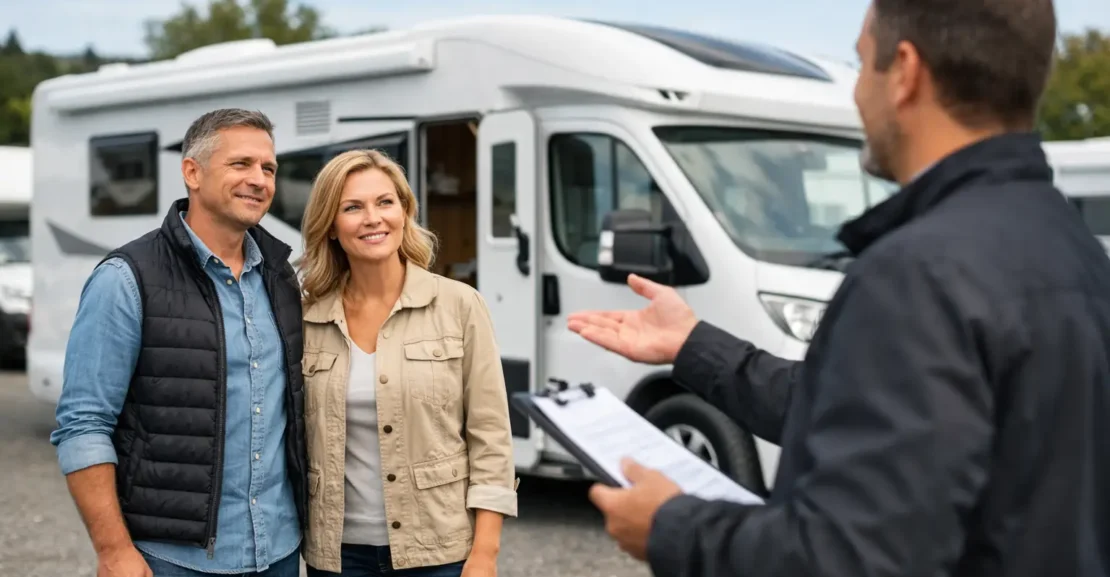
A motorhome can look ideal in photos, then feel quite different when you stand in the lounge, open the lockers and picture a wet pair of shoes by the door. A motorhome viewing appointment guide helps you move beyond first impressions and assess whether a vehicle genuinely suits the way you plan to travel around New Zealand.
Viewing by appointment gives you the time and space to inspect properly, ask questions and understand how the motorhome works. It is not about finding faults for the sake of it. It is about making a confident decision on a significant lifestyle purchase.
Before the appointment: be clear about your travel style
The most useful question is not, “Is this a nice motorhome?” It is, “Will this motorhome work for us?” The answer depends on where you intend to go, how often you will travel and who will usually be on board.
A couple planning extended trips through both islands may value generous storage, separate sleeping areas, a larger fridge and comfortable seating for rainy days. Weekend travellers may prefer something more compact, easier to park and simple to prepare for a quick getaway. If you expect to visit smaller towns, freedom camp where permitted, or take the ferry regularly, overall length, height and weight deserve particular attention.
Before you arrive, write down your non-negotiables. These might include an island bed, a separate shower, automatic transmission, solar charging, enough payload for bikes, or the ability to carry a particular number of passengers legally. Also note the features that would be nice to have but are not essential. This prevents an attractive layout or a polished exterior from distracting you from what matters most.
It is wise to review the listing details first and ask for any available service history, ownership information and appliance documentation. Knowing the vehicle’s age, kilometres, engine type and certification status gives you a better starting point for your questions.
What to take to a motorhome viewing appointment
Bring your mobile, a notepad and a tape measure. Photos and short videos are useful, particularly when you are comparing several vehicles over a few weeks. Record the inside of cupboards, the dashboard, tyre condition and any areas you want to consider later.
If two people will use the motorhome, attend together whenever possible. The person who is less interested in the driving may be the one who notices that the bed is difficult to access, there is nowhere practical to dry towels, or the bathroom feels too tight.
Wear shoes that are easy to remove, as you may want to try the shower area, cab seats and bed without tracking dirt inside. If you have specific equipment you plan to carry, such as folding bikes, a walker or sizeable camping chairs, bring dimensions. Storage that appears ample can become limited quickly once real-world gear is loaded.
Start outside and work your way in
Begin with the exterior while you have fresh eyes. Look along the body panels for dents, repairs, mismatched paint or signs of water ingress around windows, roof joins and external lockers. Open every locker and check seals, hinges and latches. A musty smell, staining, soft wall linings or bubbling surfaces should always be discussed.
Check the tyres for age, tread depth and uneven wear. Tyres can look serviceable while still being older than you would be comfortable relying on for long-distance touring. Ask when they were fitted and whether the spare is present and in usable condition. Look underneath if practical, paying attention to obvious corrosion, fluid leaks and damage to lower bodywork.
This is also the time to understand the practical side of owning the vehicle. Ask about the current Warrant of Fitness, registration, Road User Charges if applicable, recent servicing, cambelt or timing-chain requirements, and any known upcoming maintenance. A well-presented motorhome still needs a clear maintenance story.
Check the systems, not just the switches
A motorhome is a home and a vehicle in one, so each system deserves a proper demonstration. Ask to see the electrical controls, house batteries, solar display if fitted, fresh-water and grey-water gauges, gas system, heating, hot water, fridge, cooktop, toilet and awning operated where appropriate.
Do not be embarrassed to ask what a switch does or to request a second explanation. You will be responsible for these systems once you leave, and confidence comes from understanding them. If something cannot be demonstrated at the appointment, establish why and agree on what information or follow-up is needed.
Pay special attention to moisture. Water damage can be expensive and disruptive to repair, so inspect around roof vents, skylights, windows, shower walls, cupboards and floor edges. A professional independent pre-purchase inspection is a sensible next step before committing, especially for an older motorhome or one with an unclear service record.
Live in the layout for 20 minutes
Once inside, slow down. Sit where you would sit at night, stand at the bench as though you are preparing dinner, and try getting in and out of the bed. Open the wardrobe, pantry and drawers fully. Test whether the doors still work when another person is standing in the aisle.
Think through an ordinary travel day. Where will jackets, shoes and groceries go? Can one person make a cup of tea while the other uses the bathroom? Is there enough bench space? Is the seating supportive for an evening indoors? A layout that is excellent for a quick holiday can become frustrating on a three-week trip.
Sleeping arrangements deserve more than a glance. Ask the broker to make up any convertible bed so you can see the process, not just the finished result. Check mattress comfort, headroom, reading lights, ventilation and whether you can access the bathroom at night without disturbing your travelling companion.
Storage should be assessed by type, not just volume. Exterior lockers are useful for hoses, levelling ramps, chairs and tools, while internal cupboards need to hold clothing, food and everyday items securely. Consider payload as well. A motorhome may have plenty of storage, but its legal carrying capacity determines how much you can safely take with you.
Take the driving position seriously
Even if you are not able to test drive during the first viewing, sit in the driver’s seat and adjust it as you would for a journey. Check visibility, mirror positions, steering-wheel reach and access to controls. Make sure both intended drivers feel comfortable getting in and out of the cab.
Ask about the vehicle’s driving characteristics, transmission, fuel use and towing capacity if towing is part of your plan. The best choice is not always the largest or most feature-packed motorhome. A smaller vehicle may bring more freedom on narrow roads and in busy holiday parks, while a larger model may be worth it for people spending months at a time on the road.
If you progress to a test drive, drive on roads that reveal more than a straight run. Listen for unusual rattles, assess braking and acceleration, and notice how relaxed you feel behind the wheel. Comfort and confidence matter as much as specifications.
Ask questions that reveal the ownership experience
A good viewing is a conversation, not a sales pitch. Ask why the motorhome is being sold, how it has been used, where it has been stored and what the current owner has enjoyed or found challenging. Ask whether there have been repairs, insurance claims, water leaks or appliance replacements.
You should also clarify what is included in the sale. Items such as hoses, power leads, wheel chocks, tables, bedding, kitchen equipment and bike racks can affect both value and how quickly you are ready to travel. Confirm the status of self-containment certification and whether it suits the type of camping you have in mind, as requirements and access rules can vary.
At RVfinders, an appointment is an opportunity to talk through these details without being rushed. The right broker should be open about a vehicle’s strengths, limitations and suitability for your particular plans, even if that means another model may be a better fit.
Leave room to reflect before you decide
After the viewing, review your notes separately before discussing the vehicle in depth with your travelling partner. First impressions are useful, but practical concerns often surface once you have had a coffee and thought about your normal routine.
Compare the motorhome against your non-negotiables, expected running costs and likely travel pattern. If there are unanswered questions, request clarification. If you remain interested, arrange the appropriate checks, including a test drive and independent inspection where needed, before signing an agreement or paying a deposit.
The right motorhome should feel exciting, certainly, but it should also feel workable. When you can picture packing it, driving it, cooking in it and waking up in it on a South Island winter morning, you are much closer to choosing with confidence.