
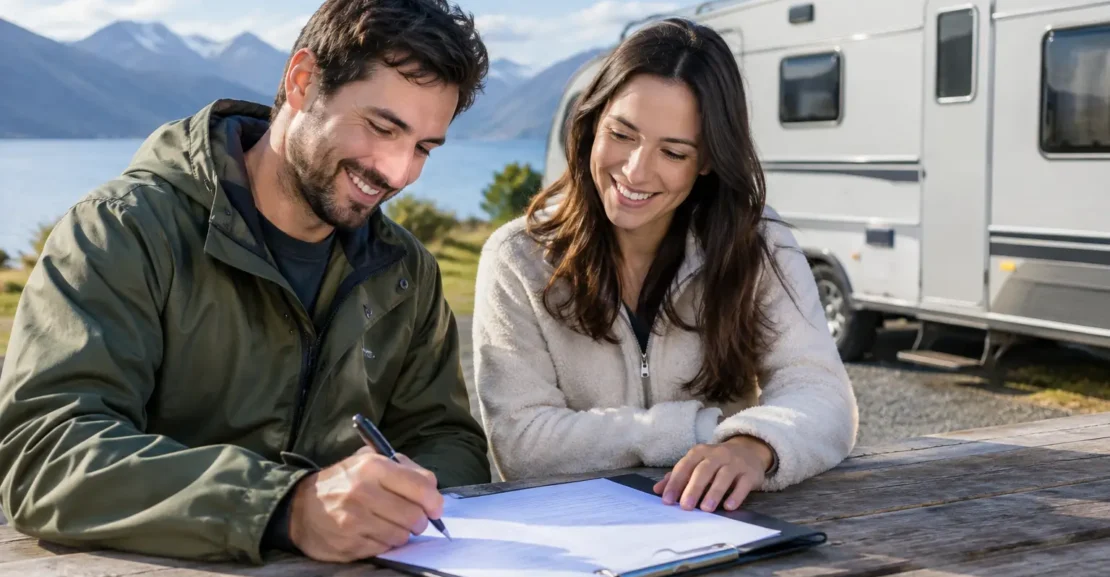
A caravan can look immaculate on a sunny viewing day, yet the paperwork is what determines whether the purchase stays straightforward once you have paid a deposit. This caravan purchase contract guide is designed for New Zealand buyers who want clarity before committing to a caravan, whether it is their first van or an upgrade for longer trips away.
A good contract does not need to be complicated. It needs to accurately record what is being sold, who is selling it, what has been agreed, and what must happen before money changes hands. If anything is unclear, now is the time to ask. It is much easier to amend a contract before signing than to sort out a disagreement after the caravan is parked in your driveway.
What a caravan purchase contract should do
At its simplest, a purchase contract is the written record of the agreement between buyer and seller. It should identify the caravan, set out the price and payment arrangements, and state any conditions of sale. It gives both parties a clear reference point if memories differ later.
For a caravan, the details matter. Accessories, awnings, batteries, portable toilets, solar equipment, towing gear and camp furniture can represent real value. If they are included in the price, list them. A verbal promise that “everything goes with it” is not as useful as a written inventory.
The contract should also distinguish between the caravan itself and any items being sold separately. This is especially relevant where a seller is keeping a bike rack, portable generator or annex, or where a specialist towing hitch is not included.
Start with the seller and ownership checks
Before focusing on the wording of the agreement, take reasonable steps to confirm who you are dealing with. Ask to see identification and compare the seller’s details with the information available for the caravan. If a broker is handling the sale, establish whether they are acting for the owner and who will receive payment.
For a registered caravan, check the registration details through the appropriate NZTA channels. Registration can be useful information, but it is not, by itself, conclusive proof of legal ownership. If the caravan has a vehicle identification number or chassis number, make sure it matches the number recorded in the contract and on the vehicle.
A Personal Property Securities Register search is also a sensible precaution. It may reveal a registered security interest over the caravan, such as finance owing to a lender. A caravan can be well presented and honestly advertised while still carrying a debt that needs to be resolved. If a search raises a concern, do not assume it will disappear once you pay the seller. Seek advice and have the matter cleared before settlement.
For imported, older, unregistered or heavily modified caravans, documentation may be less tidy. That does not automatically make it a poor purchase, but it does make careful checking more important. Ask how the caravan was sourced, whether any major work has been completed, and whether supporting invoices or certification records are available.
The essential details to put in writing
A useful caravan purchase contract should name the buyer and seller, record their contact details, and state the full purchase price. It should include the make, model, year where known, registration number if applicable, VIN or chassis number, and odometer reading if one is fitted.
It should state the deposit amount, when it is due, where it will be held, and whether it is refundable. It should also state the balance owing, the settlement date, and the payment method. Avoid making substantial payments to an account that has not been clearly explained or documented.
Include a written list of included items and any known faults disclosed by the seller. “Sold as is, where is” may be used in private sales, but it should never be treated as a reason to skip an inspection. That wording can affect your options if problems are found later, particularly in a private transaction.
If you are buying from a motor vehicle trader, consumer protections may apply differently than they do in a private sale. The seller’s status should be clear in the contract. If you are unsure what protections apply to your particular purchase, independent legal advice is worthwhile before you sign.
Make the contract conditional when it needs to be
Conditions are not a sign that you are difficult to deal with. They are a practical way to give both parties certainty about what must happen before the sale becomes unconditional. They are particularly useful when a caravan is a high-value purchase, when you are travelling a distance to collect it, or when part of the decision depends on outside information.
Common conditions include satisfactory inspection, finance approval, a clear PPSR result, confirmation of ownership, or approval from your insurer. A buyer who intends to tow the caravan with an existing vehicle may also make the purchase subject to verifying that the tow vehicle is suitable and legally compliant.
The wording needs to be specific. Rather than writing “subject to inspection”, state who will inspect the caravan, by what date, and what happens if significant issues are found. Rather than saying “subject to finance”, identify the date by which approval must be confirmed. Vague conditions can create unnecessary uncertainty for everyone.
A condition should also explain whether the buyer may cancel, negotiate a repair or price adjustment, or waive the condition. Until conditions are met or properly waived in writing, be cautious about treating the deal as final.
Inspection findings: record the agreed outcome
Moisture ingress, tyre age, brakes, wheel bearings, couplings, chassis condition and electrical systems deserve close attention on a caravan. A professional inspection can be particularly valuable if you are unfamiliar with the model or if the caravan has been stored for a long period.
Not every imperfection should end a sale. Cosmetic wear may be reasonable for the age and price, while water damage or unsafe towing equipment deserves a different response. The key is to decide whether you accept the issue, require a repair, or renegotiate the price – and then record that decision in writing.
If the seller agrees to complete work before settlement, specify the work, who will do it, and when it must be completed. “Fix the brakes” leaves room for interpretation. “Replace brake components identified as unsafe in the inspection report and provide the invoice before settlement” is far clearer.
Deposits, settlement and handover
A deposit shows genuine intent, but it should not put you in a vulnerable position. Know exactly when it becomes non-refundable and what happens if a condition is not met. Where a broker is involved, ask how client funds are managed and request a receipt for every payment.
At settlement, confirm that the caravan matches the contract, including all listed accessories and keys. Check that agreed repairs have been completed and collect relevant manuals, service records, warranties, compliance documentation and receipts. Take photos of the caravan at handover, especially if there is any pre-existing damage noted in the agreement.
For a registered caravan, complete the ownership transfer steps promptly. Arrange insurance from the time you take possession, not after the first trip. If you are towing it home, check lights, coupling, chains, brakes and load requirements before leaving. A relaxed handover is ideal, but it should still be methodical.
Questions worth asking before you sign
Ask why the caravan is being sold, how it has been stored, when it was last used, and whether there have been leaks, repairs, accidents or insurance claims. Ask for servicing history and the age of tyres, batteries and gas components. If an answer matters to your decision, ask for it to be included in the contract or supporting paperwork.
It is also wise to ask what the seller means by any broad claims in the advertisement. “Ready to travel”, “fully self-contained” or “recently serviced” can mean different things to different people. Clarify the detail rather than relying on an assumption.
A more confident way to buy
Buying a caravan is about making room for weekends away, family time and the freedom to change plans when the weather does. The contract should support that excitement, not add uncertainty. Take your time with the details, keep every promise in writing, and do not feel pressured to sign before your questions are answered.
For buyers who would value personal guidance through vehicle selection, inspection and the purchase process, RVfinders can help make the experience feel more considered and less transactional. The right caravan is only part of a good purchase – clear paperwork and a careful handover help you start travelling with confidence.