
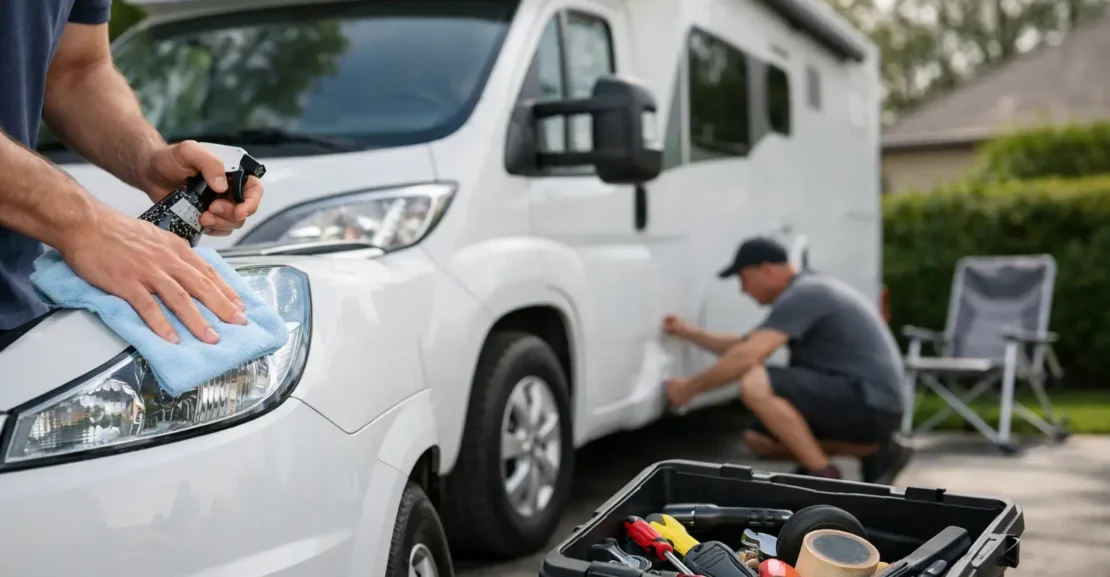
A buyer will often decide how they feel about a motorhome in the first few minutes. A clean cab, a fresh smell and paperwork that is ready to inspect all signal that the vehicle has been cared for. To prepare a motorhome for sale properly, focus on the things a buyer can see immediately, then make it easy for them to confirm the details that matter.
For many owners, selling marks the end of a very good chapter. Perhaps your travel plans have changed, you are moving to a smaller campervan, or it is simply time for someone else to enjoy the freedom your motorhome has provided. Good preparation protects the value of the vehicle and makes the selling process calmer for everyone involved.
Prepare your motorhome for sale from the outside in
Start with presentation, but avoid spending heavily on cosmetic work that will not change the sale result. The goal is an honest, well-kept vehicle that feels ready to travel, not a showroom makeover that disguises its age.
Wash the exterior thoroughly, including the roof where practical and safe. Road grime around the lower panels, wheel arches and entry step can make an otherwise tidy motorhome look neglected. Clean the windows, mirrors and headlights, and check that external lockers are empty, dry and easy to open. Remove old promotional stickers, faded campsite labels and personal decals only if doing so will not damage the paintwork.
Inspect the awning, bike rack, reversing camera and any exterior accessories. If an awning is difficult to extend or has a small tear, address it before viewings or explain it clearly when discussing the vehicle. Small unresolved issues tend to make buyers wonder what else has been overlooked.
Inside, aim for clean, light and neutral. Take out personal photographs, medicine, pantry items, clothing and anything stored beneath seats or in cupboards. Buyers need to picture their own trips, their own gear and their own routines in the space. Leaving a few practical items, such as fitted cab mats or the original table, is different from leaving the vehicle full of possessions.
Pay particular attention to the kitchen, bathroom and sleeping areas. Clean the fridge seals, shower, toilet cassette compartment, sink, hob and all cupboard interiors. Air the motorhome well before a viewing. Fragrance sprays can be overpowering, so it is better to remove the cause of odours than try to cover them up. Dampness, stale upholstery or a musty smell should never be ignored, as buyers will notice quickly.
Deal with maintenance before buyers find it
A motorhome does not need to be perfect to sell well. It does need to be presented honestly, with its essential systems working as they should. Before advertising, give the vehicle a practical once-over and decide which repairs are sensible to complete.
Check the engine oil, coolant, brake fluid, tyre condition and tyre pressures. Ensure all lights work, including indicators, brake lights, clearance lights and interior lighting. Test the windscreen wipers and washer jets, heater, air conditioning if fitted, reversing camera, electric steps and central locking. These are straightforward checks, yet faults found during a viewing can create unnecessary doubt.
Then test the living systems. Connect to mains power if possible and confirm the battery charger, power points and appliances operate. Run water through every tap, check the hot water system, operate the fridge on its available power sources and test the toilet flush. If the motorhome has solar, show that the controller is working and explain what the system supports in normal use.
Gas systems deserve particular care. Check that cylinders are secure and in date where applicable, that hoses appear sound, and that gas appliances ignite and operate correctly. If you are unsure about a gas, electrical or mechanical issue, have a qualified professional inspect it rather than guessing. A modest repair completed before marketing can be preferable to a larger price reduction after a buyer has lost confidence.
Do not conceal known faults. A minor crack in a flyscreen, a temperamental drawer latch or a stone chip is usually manageable when disclosed. Water ingress, accident damage, warning lights and major mechanical concerns need a direct explanation and should be reflected in the price. Trust is far more valuable than a difficult conversation delayed until inspection day.
Gather the paperwork buyers will ask for
Paperwork tells the story of ownership. A tidy folder gives buyers confidence that the motorhome has been maintained and lets them make an informed decision without chasing information after a viewing.
Have the following available in one place:
- registration and current Warrant of Fitness or Certificate of Fitness details, as applicable
- service records, repair invoices and receipts for significant upgrades
- owner manuals for the base vehicle and motorhome equipment
- self-containment documentation, where relevant, including certification details
- appliance, solar, battery, alarm or satellite information
- keys, remotes, wheel-nut tools and any spare items supplied with the vehicle
Include dates and kilometre readings for recent servicing, cambelt replacement where relevant, tyres, batteries and brake work. If the motorhome has been stored for a period, be ready to explain how it was stored and what checks have been completed before sale.
It also helps to prepare a simple list of features. Buyers may not remember every detail after a viewing, particularly when comparing several vehicles. Note the number of berths and seatbelts, transmission type, engine size, water tank capacities, heating, solar capacity, battery setup, towing capability if rated, and any accessories included. Check specifications rather than relying on memory.
Price for the market, not just the memories
Your motorhome may have taken you to favourite places from the Far North to Central Otago, but buyers will assess it against comparable vehicles available now. Age, kilometres, layout, condition, chassis, transmission, maintenance history and self-containment status all influence value.
Start by comparing genuinely similar motorhomes, not just any vehicle with the same badge. A low-kilometre coachbuilt motorhome with recent servicing and a desirable layout may command more than a similar-aged vehicle needing tyres, batteries and interior attention. Equally, expensive accessories do not always return their full purchase cost. They can make a vehicle more appealing, but the market decides how much extra they add.
Set an asking price that allows reasonable discussion without creating the impression that you are unrealistic. Pricing too high can lead to weeks of low-quality enquiries and fewer serious viewings. Pricing too low may attract immediate interest but leave you wondering whether you gave away value unnecessarily. If you are uncertain, professional market guidance can help establish a fair position based on the vehicle’s actual condition and current demand.
Make viewings easy and informative
Choose a dry, well-lit location with enough room for buyers to walk around the motorhome and open lockers. Have it connected to power if possible, with the water system ready to demonstrate. Put the keys, manuals and feature list to hand, but avoid overwhelming visitors with every detail at once.
A good viewing follows how people use the vehicle. Begin in the cab, then move through the living area, kitchen, bathroom, sleeping arrangements and storage. Demonstrate equipment as you go. Explain how the beds convert, where the fresh and grey water drains are, how the heating works and what you have found most useful on the road.
Be prepared for sensible questions about fuel consumption, servicing, overnighting, battery capacity and previous ownership. It is fine to say you do not know an answer, provided you offer to check the records. What matters is being accurate rather than making an assumption to keep the conversation moving.
Before a test drive, check your insurance requirements and accompany the prospective buyer where appropriate. Confirm that they are properly licensed and agree on the route. A test drive should allow them to feel the steering, braking, visibility and driving position without becoming an open-ended outing.
Give buyers confidence to take the next step
A well-prepared sale is not about pressure. It is about removing avoidable uncertainty. When the motorhome is clean, maintained, accurately described and supported by clear documentation, the right buyer can focus on whether it suits the travel they want to do.
If managing enquiries, viewings and negotiations feels like more work than you expected, a specialist broker can provide practical support while keeping the process personal. RVfinders understands that a motorhome is more than a vehicle – it is a significant lifestyle investment, and the next owner deserves to begin their journey with confidence.