
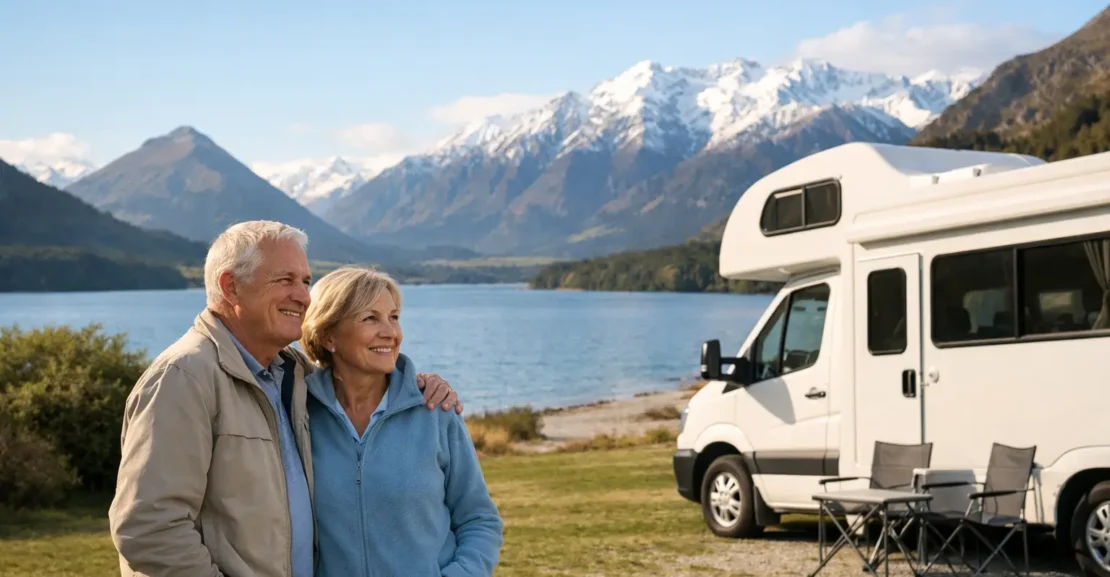
The best motorhome for retirees usually is not the biggest, flashiest, or most expensive one on the yard. It is the one that feels easy to live with on day one, comfortable after three weeks on the road, and practical enough that you still enjoy using it a year later. For many New Zealand couples, that means looking past brochure features and focusing on how the motorhome will actually fit your travel style.
Retirement opens up a different kind of travel. You are not trying to squeeze a weekend away into a public holiday rush. You have time to stay longer, choose the scenic route, and travel in a way that suits your energy and comfort. That changes what matters in a motorhome. Layout, bed access, storage, drivability, heating, and bathroom design often become more important than extra berths or flashy entertainment systems.
What makes the best motorhome for retirees?
A good retirement motorhome should reduce effort, not create more of it. You want a vehicle that is easy to get in and out of, easy to park, and easy to manage at a camp or holiday park. Comfort matters, but so does confidence behind the wheel.
For most retirees, the sweet spot is a motorhome that feels spacious enough for extended trips without becoming stressful to drive. That often points to a two-berth or compact four-berth motorhome with a smart layout rather than a large family-focused model. If you mostly travel as a couple, paying for extra sleeping capacity can mean carrying extra bulk you do not really need.
The best choice also depends on how you plan to use it. A couple doing short North Island breaks will want something different from buyers planning months on the road, freedom camping regularly, or heading into colder South Island conditions. There is no single answer, but there are some clear features worth prioritising.
Start with your travel style, not the badge
It is easy to get drawn to a known brand or a polished interior. Those things matter, but they should come after the basics. First, think about your real travel habits.
If you like moving every day or two, a shorter motorhome with straightforward set-up will make life easier. If you prefer settling in one place for a week, interior living space becomes more valuable. If one of you enjoys driving and the other does not, the vehicle size and visibility become a bigger factor. If you plan to travel in winter, insulation and heating move right up the list.
This is often where buyers make the smartest decision. Instead of asking, “What is the best motorhome for retirees?” ask, “What will feel simple and comfortable for the way we travel?” That shift usually leads to a better match.
Size matters, but not in the way many buyers think
A larger motorhome can look appealing because it promises more room, more storage, and a more residential feel. Sometimes that is exactly right. But bigger vehicles come with trade-offs. They can be harder to manoeuvre, more tiring on narrow roads, and less relaxed in town or at busy parks.
For many retired couples in New Zealand, a motorhome around 6.5 to 7.5 metres hits a practical balance. It often gives you a proper bed, decent bathroom, enough kitchen space, and comfortable seating without crossing into a size that feels cumbersome. If you are stepping up from a car and have not driven larger vehicles before, this range is often a sensible place to start.
That said, if you are planning very long trips and want more separation between living and sleeping areas, a larger A-class or roomy coachbuilt motorhome may be worth it. The key is being honest about whether that extra space will improve your trips or simply make the vehicle harder to manage.
The layout is where comfort is won or lost
A well-designed layout can make a modest motorhome feel generous. A poor layout can make an expensive one feel awkward.
Permanent beds are often high on the list for retirees, and for good reason. Making up a dinette bed every night can wear thin quickly, especially on longer journeys. Island beds are popular because they are easy to access from both sides, although they do take up space. Single beds can work very well too, especially if you value easy access and a bit more personal sleeping room.
Do not underestimate the bathroom. A compact wet bathroom may be perfectly fine for some travellers, but others will strongly prefer a separate shower cubicle. If mobility is a consideration now or may become one later, look closely at step heights, handholds, and how easy it is to move around when the bathroom door is closed.
The lounge area matters more than many first-time buyers expect. If you spend evenings reading, watching a bit of television, or simply escaping the weather, seating comfort is not a small detail. Swivel front seats, supportive cushions, and a practical table can make a big difference to daily enjoyment.
Easy driving builds confidence
One of the best motorhome choices for retirees is often the one that feels the least intimidating on the road. Good visibility, supportive mirrors, reversing cameras, and a comfortable driving position all matter. Automatic transmission is especially popular, and for many buyers it is worth prioritising. It reduces fatigue and makes stop-start driving much easier.
Engine power should match the size of the motorhome, particularly if you plan to tour hilly parts of New Zealand. You do not need a racing machine, but you do want enough pulling power that the vehicle feels settled and capable. Suspension and overall ride quality also deserve attention. A motorhome can look excellent parked up and still feel tiring after a full day behind the wheel.
If possible, think about who will actually drive it. Some couples are happy with one main driver. Others want both people to feel comfortable taking a turn. That can influence how large or specialised the motorhome should be.
Features worth paying for
Some extras are nice to have. Others genuinely improve ownership.
Heating is one of them. Good diesel heating or an efficient onboard heating system extends your travel season and makes shoulder-season trips much more pleasant. Solar and decent battery capacity can also be worthwhile if you want flexibility and enjoy staying off-grid from time to time.
A practical fridge, workable bench space, and enough storage for longer trips are also worth more than cosmetic upgrades. You will feel these features every day. The same goes for easy-access service points, sensible control panels, and systems that are straightforward to use without needing a manual every second day.
If you are choosing between a newer basic motorhome and an older but better-equipped one, it often comes down to condition and maintenance history. Age alone does not tell the full story. A well-cared-for vehicle with quality features can be a stronger long-term buy than a newer model that cuts corners in the areas that affect comfort.
New or used?
There is no universal right answer here. A new motorhome offers modern features, warranty support, and the appeal of being the first owner. For some retirees, that peace of mind is worth the higher price.
A used motorhome, though, can represent very good value, especially if it has already gone through the first stage of depreciation and has been properly maintained. Many buyers find that buying used allows them to access a better layout or higher-quality fit-out for the same budget. The important part is not simply whether it is new or used, but whether it has been looked after, inspected properly, and suits your plans.
This is where broker support can be especially useful. A personalised buying process helps narrow the field to vehicles that genuinely fit, rather than leaving you to sort through dozens of listings that look similar on paper.
Budget for ownership, not just purchase
The purchase price is only part of the picture. Insurance, servicing, tyres, registration, storage, and campsite costs should all be factored in. Fuel use also varies significantly between motorhomes, especially as size increases.
Sometimes the best-value purchase is not the cheapest one. A motorhome with a practical layout, a strong maintenance record, and features you will actually use can deliver more satisfaction and better resale appeal later on. Buying too large, too cheaply, or too quickly can be more expensive in the long run.
So, what is the best motorhome for retirees?
For most New Zealand retirees, the best fit is a well-maintained two-berth or compact four-berth motorhome that is easy to drive, has a permanent bed, a comfortable lounge, and enough self-containment for flexible travel. That will suit more people more often than an oversized luxury model or a stripped-back camper that asks too many compromises.
Still, the right answer depends on how you want retirement to feel. Some buyers want long, slow touring with all the comforts of home. Others want a simple, dependable vehicle for regular escapes. The smartest purchase is the one that supports that lifestyle without adding stress.
If you take your time, ask practical questions, and focus on ease of use as much as appearance, you will usually end up with a motorhome that feels right not only at handover, but every time you set off again. And that is when ownership becomes what it should be – comfortable, confidence-building, and something to look forward to.