
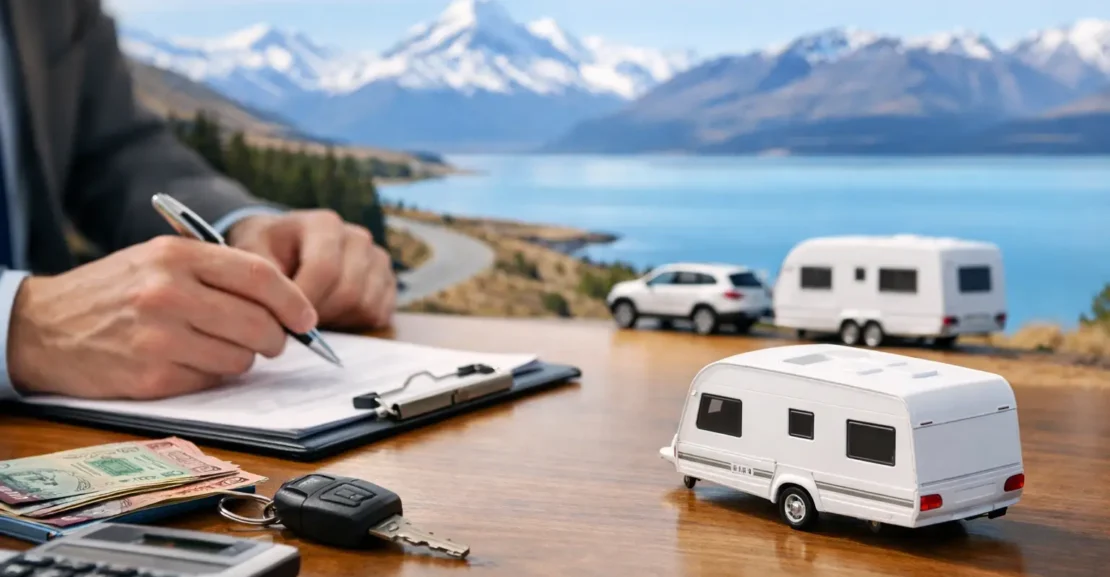
That question usually comes up right after the exciting part – you have found a caravan that feels right, you can already picture the trips away, and then reality steps in. Can I finance a caravan, and if so, what does that actually look like in New Zealand?
The short answer is yes, in many cases you can. The longer answer is that caravan finance depends on the type of caravan, your deposit, your income, your existing commitments, and how the lender views the purchase. Like most larger lifestyle purchases, there is rarely a one-size-fits-all answer. A good finance option should make ownership more manageable, not stretch your budget so far that the experience stops being enjoyable.
Can I finance a caravan if it is new or used?
In most cases, yes. Finance may be available for both new and used caravans, but the terms can vary. Lenders often look more favourably at newer caravans because they are easier to value and may hold their value better over time. That does not mean used caravans are off the table. Many buyers prefer them for value, especially when the caravan has been well cared for and has a clear history.
Age matters because lenders consider risk. An older caravan may attract a shorter loan term, a different interest rate, or extra checks around condition and resale value. If the caravan is quite old, imported, heavily modified, or difficult to value, finance can become more limited.
This is one reason buyers benefit from solid information before they apply. Details such as make, model, year, condition, and realistic market pricing all help create a smoother finance conversation.
How caravan finance usually works
At its simplest, caravan finance lets you borrow money to purchase the caravan and repay that amount over an agreed term. You will usually make regular repayments, often weekly, fortnightly, or monthly, depending on the lender and your preference.
The amount you can borrow is influenced by your financial position and by the caravan itself. Some buyers put down a deposit to reduce the amount borrowed, while others finance most of the purchase price. A larger deposit can improve your application because it lowers the lender’s risk and reduces your repayments.
The loan term also matters. A longer term usually means lower regular repayments, which can help with cash flow. But it can also mean paying more interest over time. A shorter term may cost more each month, but less overall. Neither is automatically better – it depends on your comfort level, income stability, and broader plans.
What lenders are likely to assess
When people ask, can I finance a caravan, they are often really asking whether they personally are likely to qualify. Lenders generally look at a mix of affordability, credit history, and asset suitability.
Your income is a key part of the picture. That includes salary, business income, superannuation, or other regular earnings. Lenders want to see that repayments are realistic alongside your existing commitments, such as a mortgage, rent, personal loans, credit cards, or vehicle finance.
Your credit record also plays a role. A strong repayment history can help. Past missed payments or defaults do not always mean an automatic no, but they may affect the options available or the rate offered.
Then there is the caravan itself. Lenders usually want enough detail to confirm what is being purchased and what it is worth. If the caravan is in sound condition and priced sensibly, that tends to support the application.
Deposit or no deposit?
Both scenarios can be possible, but a deposit often gives you more room to move. Even a modest deposit can reduce the total amount borrowed and may make the application more attractive to a lender.
For buyers who are trading up from another RV, funds from a sale can sometimes act as that contribution. For first-time buyers, it may be a matter of deciding whether to buy sooner with a smaller deposit or wait and borrow less later.
There is no single right answer here. If keeping cash in reserve matters because you want a financial buffer for registration, insurance, storage, maintenance, or unexpected repairs, financing a little more may make sense. If your priority is lowering interest costs, a larger deposit can be the better path.
The real cost is more than the repayment
A common mistake is to focus only on whether the monthly figure looks manageable. Repayments matter, but they are only one part of ownership costs.
Before taking on caravan finance, think about insurance, servicing, tyres, batteries, brake maintenance, towing setup if relevant, site fees, and accessories you may want after purchase. A caravan can open up a wonderful lifestyle, but it is still an asset that needs ongoing care.
This is where honest budgeting is valuable. It is better to choose a caravan that leaves breathing room than one that looks ideal on paper but creates pressure every month. The right caravan is not just the one you can get approved for – it is the one you can comfortably enjoy.
Secured finance versus personal lending
Some caravan purchases are funded through secured finance, where the caravan is tied to the loan. In other situations, buyers may consider an unsecured personal loan. The difference affects both cost and flexibility.
Secured finance can sometimes offer better rates because the lender has security over the asset. However, approval may depend more heavily on the caravan meeting lending criteria. With unsecured lending, the caravan itself may be less central to approval, but the rate can be higher because the lender is taking on more risk.
For many buyers, the better option comes down to the age and value of the caravan, as well as their overall financial profile. What sounds simple at first can be more nuanced once rates, fees, and loan conditions are compared properly.
Can I finance a caravan for full-time travel?
Potentially, yes, but your intended use can matter. If the caravan is for holidays and occasional touring, that is one scenario. If it is part of a longer-term lifestyle change, lenders may look more closely at stability of income and whether your living arrangements are changing.
For retirees and pre-retirees, this can be especially relevant. Many buyers are financially sound, but their income may come from different sources than a standard salary. That does not make finance impossible. It simply means the application may need clearer documentation and a realistic view of affordability.
If you are planning extended travel, it is wise to think beyond loan approval. Consider whether the caravan still suits your needs if your plans shift. A layout that feels fine for weekends away may be very different from what works for months on the road.
Why the caravan choice affects the finance result
Not every caravan is equally easy to finance. A well-presented caravan with good documentation, realistic pricing, and a clear ownership history can make the process more straightforward. The opposite is also true.
This is one reason buyers often benefit from guidance before they commit. If a caravan is overpriced, poorly matched to your needs, or likely to raise lender concerns, it can cost time and confidence. A purchase this significant deserves a clear-eyed look at both suitability and financeability.
That support can be especially helpful for first-time buyers, who may be comparing layouts, tow weights, age, features, and pricing all at once. It is a lot to assess without experienced input.
What to prepare before applying
If you are asking can I finance a caravan, it helps to get your paperwork and priorities in order early. Lenders will usually want identification, proof of income, details of debts and expenses, and information about the caravan you want to buy.
It also helps to be realistic about your budget range before you fall in love with a particular van. Buyers are often better served by understanding what repayment level feels comfortable first, then narrowing down options within that range. That approach tends to reduce stress and avoid disappointment later.
A broker-led buying process can help here because it connects the vehicle choice with the financial conversation. Rather than treating finance as an afterthought, it becomes part of choosing well from the start.
So, can I finance a caravan?
In many cases, yes – but the better question is whether you can finance the right caravan on terms that genuinely suit you. That means looking at the full picture: your budget, the caravan’s value and condition, the loan structure, and the kind of travel life you want it to support.
At RVfinders, we see this purchase for what it is: not just a transaction, but a lifestyle decision that deserves careful guidance. If you take the time to match the caravan and the finance properly, the road ahead tends to feel a lot more enjoyable from day one.
A caravan should give you more freedom, not more worry, so the smartest finance decision is usually the one that lets you head away with confidence and still sleep well when you get home.